
PU 12: No Such Thing as Free Speech in Germany
There is a big difference between the German freedom to have an opinion and actual freedom of speech in the American sense, as a new report on the German state's speech crackdown clearly illuminates.
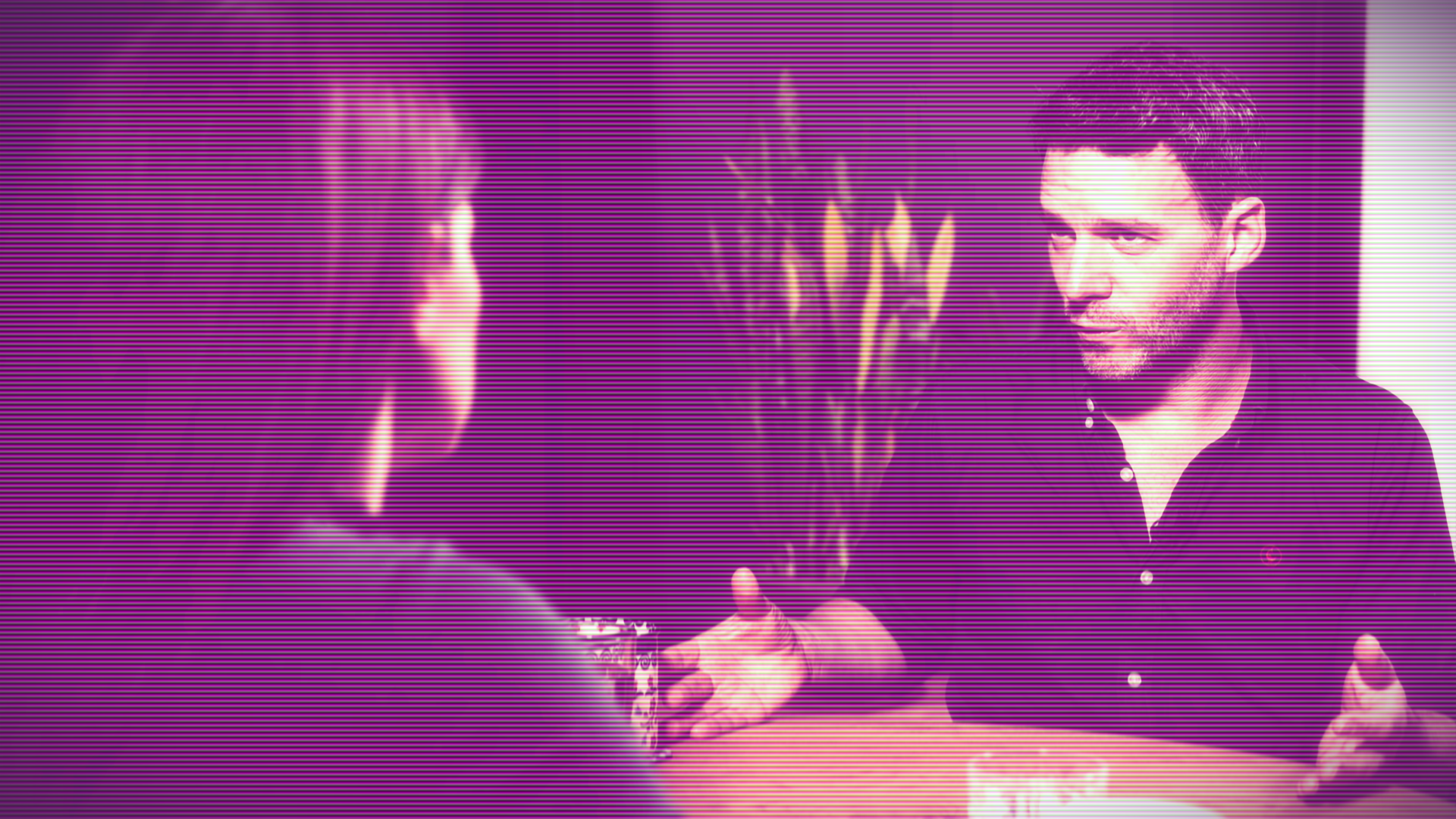
Jasmin Kosubek interviewing Andrew Lowenthal of liber-net (Jasmin Kosubek)

Subscribe to podcast:



Transcript
This is Punching Upwards episode 12 for the 30th of November 2025. No such thing as free speech in Germany. Broadcasting from the rainy Ruhrgebiet, where the weather is just cold and glum is our topic today. My name is Fab. I’m a journalist. This is important for any censors out there who are listening to this. And I’m also your host for this podcast. Welcome to Punching Upwards.
Well, today I want to talk about a topic that is close to my heart, but is also very painful and gut-wrenching to me. I want to talk about a report that came out the other week. It is called The Censorship Network, Regulation and Repression in Germany Today. By an organization called liber-net. And I worked through this the past three days. And it’s a pretty hefty report. It’s, what is it here? 63 pages. And it took me that long, not because I’m slow at reading, which I am, but also, of course, because I am … I like to do research and check things. And I did that.
And I want to talk about this report particularly because it’s been pretty much ignored in the media. I haven’t seen any serious reporting about this so far by the legacy press. Aside from a few, basically, you know, this is misinformation or why you shouldn’t listen to this story. The prevailing thing I’ve seen, especially on Twitter, or as people like to call it these days, X, from journalists I follow has been … And I’m not quoting anybody particularly here because I think this is a general view, but it was basically … I’m not even looking at this. And then being asked by, I guess, the readers … But what about what’s in here, what’s purporting to be facts? Several journalists were saying, no, I can see who this is from. And I looked at the infographic, and I’m not even going to look further into this. This is bullshit. And it’s been basically – it’s being played off as Russian misinformation, which – Yeah, it’s interesting to me. We can get into that later maybe.
But before I want to get into the report, I want to explain the title of this episode. And something I learned in researching this, because this is not hyperbole, I really want to explain why there is no such thing as free speech or freedom of speech in Germany. And actually researching all of this, I learned something that actually shocked me.
A little background here. Obviously, I went to school in Germany. I was very interested in politics all through school. I did philosophy later in high school and always interested in history politics. Then I went to university and I actually studied English history, modern history and politics and dealt with a lot of these topics. Actually, in politics, we did a lot of EU politics, EU law. And I was very interested in, especially in constitutional law in Germany. I mean, not from a law degree standpoint, just from the politics standpoint. I have to point out that I didn’t finish university. I’d never got a degree. But I spent a lot of time there. I think 13 semesters, you know, very interested in studying things.
And here’s something that I didn’t learn, some facts that I did not learn in school, neither in school nor in university. And also something … I want to mix that up with something that I’ve thought about a lot in the last few years, basically since the Twitter Files. I mean, I’m very interested in U.S. freedom of speech issues. Generally around the world, but I’m very interested in the U.S. And so, there’s almost a linguistic difference between freedom of speech and what we have in Germany. But to start off, I want to read you something.
So in the report, they call this the Basic Law, which I’ve never heard. So the German term is Grundgesetz, the GG, we also abbreviate it. I always refer to … and I’ve always basically heard it being referred to in academia as the constitution. Grundgesetz translates to basic law, but it sounds a little bit weird. It is not technically a constitution, but it is a de facto constitution. It is basically a basic law for the country that all other laws have to conform to. And there are special articles in the front that cannot be changed. And one of these articles is Article 5, which is the German article that deals with freedom of communication, freedom of the press. And this is our freedom of speech article.
This is our First Amendment. And I want to read this to you. I’m going to read it to you in German and then I’m going to translate it. So there’s three parts. The first part says: Jeder hat das Recht, seine Meinung in Wort, Schrift und Bild frei zu äußern und zu verbreiten und sich aus allgemein zugänglichen Quellen ungehindert zu unterrichten. Die Pressefreiheit und die Freiheit der Berichterstattung durch Rundfunk und Film werden gewährleistet. Eine Zensur findet nicht statt.
Translated, this means everybody has the right to propagate his or her opinion in words, in written form, and as pictures, to propagate this and to inform themselves from publicly available sources without being hindered in this. The freedom of the press and the freedom of reporting by broadcast media and film, movies, film media … is assured … is guaranteed. And now very important, I’m going to come back to this censorship doesn’t happen … censorship isn’t happening … shall not be happening, basically, you can translate it to.
The second part of this article is, these rights are curtailed in the prescriptions of, and this is very important, general laws and law statutes that shall protect the youth and the personal, it’s … it basically means personal honor. It’s kind of an old-school German jurisprudence term that means it’s basically slander, libel and slander. You’re not allowed to impinge somebody’s honor, to insult them.
And then there’s a third part of this article that says: Kunst und Wissenschaft, Forschung und Lehre sind frei. Die Freiheit der Lehre entbindet nicht von der Treue zur Verfassung. This doesn’t really concern us, but I’m going to translate this anyway. Arts and the sciences, Wissenschaft und Forschung is basically both science, and teaching, are free. This – the freedom of teaching, of, you know, education does not lift your – This is hard. It does not lift your obligation to the constitution. So they actually call it constitution in here sometimes. So basically it means you have to be, you know, you’re free in what you teach, but you have to be beholden to the constitutional order of the country. This is this article. This is our free speech article in Germany. And as I said, it says, censorship does not apply.
Now, something I didn’t know. And I did some research, not only in preparation for this, but generally. So I’ve had a constitution for decades. So it’s just the book with the legal text. Now, if you read something like there is to be no censorship. That sounds very … clear, you know, that sounds like there is no ambiguity there at all but in fact what is important is how this has been um interpreted in law and so there’s a book that I bought some time ago … So there’s a commentary, a legal commentary to the constitution.
I have the 17th edition which is from 2022. The book is is called, so there are two authors: Professor Dr. Hans D. Jarass and Professor Dr. Martin Kment. I think, I don’t even know if they’re still alive, but the book’s generally called Jarass. Jarass / Pieroth. I think that was another author. Oh, I think that guy founded it but died. I don’t know. But it’s generally called Jarass. It’s basically the book that constitutional lawyers use. This is the commentary based on court cases in the past that interprets this, interprets the constitution.
So interestingly, if you look up the part where it says censorship doesn’t happen, there are several things that I didn’t know. So one thing I didn’t know before I researched this was that by, so in German language, there’s basically two kinds of censorship, Vorzensur and Nachzensur. It’s kind of pre-censorship and post-censorship. And it says very clearly in here that this pronunciation that censorship does not happen only means Vorzensur. And that Nachzensur is not covered by this. And so it’s only pre-censorship, not post-censorship.
And what they mean is pre-censorship is basically if you have a government office and the press … So the other thing, or maybe I should explain this first. The other thing I didn’t know, and I’m going to come back to that maybe, but the other thing I didn’t know is that this only applies to the press or like it only applies this whole … freedom of censorship only applies to organizations, basically the press. It doesn’t apply to private persons, which I’ve never been taught, not in school, not in university. It’s not like I studied math or something. I was very interested in this. I did all the courses I ever could on freedom of speech and stuff like that. Never been taught. The only thing I can think of is that people don’t know this, and even university professors. I think probably law professors know this, But, you know, I was studying politics. Maybe some of them don’t know it. I don’t know.
But so this pre-censorship basically means the government is not allowed to have an office where the press has to hand in their articles or their movies or films or whatever they’re making, radio broadcasts, before they get published. That is what this does not allow. It does not apply to so-called post-censorship. So the state is allowed, from how I understand this, and obviously I’m not a lawyer, as you can tell, by having me just having discovered this after 42 years of living in this country. So the state is actually allowed, if the press publishes something and they deem that to be against some law, then they are allowed to afterwards censor that, even if it’s the press.
They’re just not allowed to have like an office where it’s kind of like the Soviet Union. It’s weird because even the Nazis kind of never had this kind of censorship in Nazi Germany. They basically made sure that everybody agreed with them, right? They would shoot everybody, for example, in the press or like force them out of the country. So they were basically sure that everybody was even in a position to publish knew that if they published something that was obviously against what the state wanted, they would face dire consequences, most probably death. So they didn’t even have an office like the Soviet Union, where this was very bureaucratized, where they had like this expectation of this is all legal and proper. And, you know, you’d hand in your book or your article and then the government censor would look over it and change things. During Stalin’s time, often Stalin himself was editing articles in the newspaper. Which, today, I find really weird. But yeah, so … this kind of censorship is what this does not allow.
It does not mean that there is no censorship, especially of private persons, because this does not apply to public persons, which I find very interesting. So this is something I learned. And so there is censorship in Germany. And obviously where there’s censorship, there’s not complete freedom of speech. But another point I wanted to get into is that in Germany, we don’t have a term for freedom of speech. And this is a very linguistic thing that probably goes back to the 1800s maybe, or the 1900s. But in Germany, this thing is what we call this article, we call Meinungsfreiheit, the freedom to have an opinion.
And you would think that’s maybe just the linguistic point, but I’ve been thinking about this a lot in the last few months. And I think it’s very emblematic of the fact that the freedom of speech tradition that exists in the US, we just don’t have in Germany. By calling this an opinion, the freedom to have an opinion … It doesn’t, by the term alone, and this is not, you know, terms matter, linguistics are important, languages matter. This is what people have in their mind in Germany. They don’t even understand. So they think Meinungsfreiheit is the same as freedom of speech. But when they think that, they think that freedom of speech in the US is also freedom of opinion. But in the US, it’s very specifically … all kinds of speech are protected.
And if you look into this commentary here, there’s a lot of things. So the thing that is covered is having an opinion. For example, what is not covered under this article is statements of fact. There are covered under different articles in the constitution that are protected. It’s the right to have that, but they’re not protected under the freedom of speech term or concept in Germany. Okay. For example, so it’s specifically things that … It’s a broad definition of what’s an opinion. But publishing statistics, for example, wouldn’t be covered under this. Because if it’s really clear, just objective data, it’s not an opinion.
What’s also not covered is saying something that is demonstratively false. So if you can actually proove in a court of law that it’s false. This is why, for example, claiming in Germany, claiming that the Nazis didn’t prosecute the Jews is not covered under this freedom of speech, freedom of opinion, basically, because it’s not an opinion. It’s also wrong. It’s demonstratively wrong. So this is not covered.
And by this, there’s all kinds of these things. I don’t want to get deeper into this. But by this, you can already see that the general concept of freedom of speech is very different from the US concept and the concept that is kind of understood in the English-speaking world. And I think this is very important to explain what I will talk about now, explain this report. And what basically has happened in Germany. And so Germans have a very different understanding of freedom of speech. And I would go as far and I actually mean this, I would say that freedom of speech, free speech does not exist in Germany, at least not like an English speaking person would understand it. You have freedom of the press, but you also have, obviously, censorship, as I just laid down. And the protected speech of citizen is relatively narrow, and it’s already linguistically defined as an opinion.
So that opens the door, which we will see when we talk in this report. This is what these censorship organizations do. There’s actually a slogan that’s mentioned in this report, which is very famous in German, which has been like a slogan for these fact checkers and these people who police speech and have started doing this in the last few years. They say, hate is not, hate is not an opinion. Hass ist keine Meinung. Which is already, see, this is how you do it, right? This is how you put certain things people say and take them out of the context of being protected in the constitution.
Now, I would say, of course, hate is not an opinion. Hate is an emotion. What they mean, however, when they say that is hate speech is not an opinion. And, I mean, I’m not a fan of hate speech, but what is it, if it’s not an opinion? It’s not a fact, right? It’s not statistical data. Of course it is an opinion. It is the most … I think it’s one of the best examples for opinion, because hate speech, as people define it, stems from hate, which is a very strong emotion. So it’s emotion-based. It’s not fact-based. It’s emotion-based. And isn’t that exactly what this Article 5 is supposed to protect? I would say.
But yeah, so we’ll get into this. So to start off, so this is a report by a new organization. It’s kind of like a freedom of speech organization called liber-net. And it’s founded, and this report is authored in part, it’s authored by seven or eight people that are not named. But the CEO of the organization is called Andrew Lowenthal. And more about him later. But I just want to read parts of the introduction of this report. And I don’t know if this was written by Lowenthal alone, but I thought this was great. I think this is the best analysis, and this is not hyperbole, I think this is the best analysis of the German political situation as it is right now that I’ve read in the last 10 years.
Since its founding in 1949, the Federal Republic’s self-image as a free society has relied on certain guarantees of free expression, including media independence together with clearly defined limits on the government’s authority to regulate speech. A liberal ethos, shaped in part by the catastrophes of the first half of the 20th century and by West Germany’s position on the front line of the Cold War, has historically informed the country’s constitutional order and the civil society built around it.
The arrangement has long been regarded as a bulwark against authoritarian censorship. Over the past decade, however, this liberal democratic framework has shown signs of erosion. A recent poll of Germans published by the European, for instance, revealed that 84% of respondents reported having refrained from expressing their views out of fear of repercussions.
A clear signal that the polity sees itself as politically constrained. Moreover, when asked directly, 54% reported having personally experienced episodes in which they were unable to articulate an opinion freely. These data suggest an intensifying contradiction between Germany’s self-understanding as a free society and the reality of an increasingly restrictive situation.
The outlook of the German polity is not surprising. It is no longer exceptional to read about police raiding someone’s home Subsequently, Germany has gained worldwide notoriety for its heavy-handed efforts to combat what it broadly designates as misinformation and hate speech, terms frequently weaponized to punish disfavored views.
A course in political culture may explain some of the current developments, but restrictions on political speech derive chiefly from institutional sources within a new state-backed regulatory framework. This apparatus has been further tightened amid the Ukraine and Gaza crises and is shaped primarily by the convergence of geopolitical and economic pressures now weighing on the country’s prospects and, in turn, on the legitimacy of its political establishment. Germany’s political leadership has opted for containment over reform, deploying ever-increasing regulatory instruments and exercising repression to sideline popular dissent across the political spectrum, touching every sphere of policy debate.
From the Christian Democratic Union, CDU, and its Bavarian sister party, the Christian Social Union, CSU, through to the Greens, Berlin’s ostensibly rival factions have moved in virtual lockstep on unprecedented measures from public health to foreign policy and have disregarded pressing matters of popular concern. Deteriorating infrastructure, inclusive of a dire shortfall in healthcare capacity, mounting fears of escalating war in Europe and increasing friction over immigration.
The strategy appears to be a Faustian bargain made by progressives with the extreme center to empower an increasingly repressive state in delimiting internet discussion. while failing to consider that their political foes could someday be at the helm of the same repressive apparatus. This strategy has had the presumably unintended effect on inflaming a real lack of representation among the discontented, fueling a populist movement which… to the chagrin of the establishment, appears by several measures to have gained the projected support of a quarter of the electorate. Why has Germany taken such an aggressive approach?
First, Germany, as with most OECD countries, is governed by an increasingly insular and globally oriented political leadership seeking to stem the populist tide, whether of the left or right. The second major factor is Berlin’s subservience to the Washington establishment. Since late 2017, the US has formally pursued a national security strategy of containment directed at both Russia and China. Geopolitical rivals it has designated as revisionist powers engaged in strategic competition with the US. These causes, combined with Germany’s unique federalist regulatory architecture and federal funding mechanism, accounts for the specificity of Germany’s censorship network. This situation is exacerbated by Germany’s geopolitical dependence on the US. In demonstrating its Atlanticist alignment against Moscow and Beijing, Germany only compounds its economic difficulties and feeds division between elite and popular politics.
Treating Russia and China as geopolitical antagonists runs counter to Germany’s immediate economic interests. since as Europe’s leading economic and industrial power, it has relied on affordable energy from the former and more recently exports to the high-growth economy of the latter, as it itself industrialized. Germany’s position as an energy-poor but world-beating manufacturer for exports in the heart of Europe therefore comprised the decades-long model of Rhenish capitalism underwriting the Federal Republic’s social contract. A self-undermining fidelity to the US-led Atlantic order is now evident in Berlin’s committed reversal of a long-standing policy of détente with Moscow. That policy, dating to Chancellor Willy Brandt’s Ostpolitik of the late 1960s, had a powerful socialist and pacifist component.
A substantial portion of the citizenry recognized peaceful relations with Moscow and as in the national interest, since Europe, and West Germany specifically, would be ground zero in any world war precipitated by Washington-led rearmament of the 70s and 80s. Post-Cold War economic integration eastwards after unification was extended and endured practically up to the middle part of the last decade, despite perfunctory denunciations of Moscow’s human rights violations.
From the activist left, through the SPD leadership and big business, it was simply taken for granted that economic ties requiring basic good diplomatic relations with Russia were beneficial to Germany and a condition of general peace in Europe, especially when the rest of the Eurozone lay in tatters after the 2008 world economic crises. Today, neither Brandts Ostpolitik nor the narrower mercantilist outlook represented by former Chancellor Angela Merkel in the first decades of this century are to be found among the governing parties. That German politics should have inverted so quickly, with those historically skeptical of Washington essentially falling in line without question and at such great cost to German society, one need only think of the Nord Stream sabotage, is indicative of a sense of urgency among the country’s elite to bring Germany into line with US policy towards Russia and China.
Politics is now diverted away from rational self-reflection in the service of Washington’s escalation against its Eurasian adversaries, and consequently such politics must be accompanied by stepped-up repression. This repression is imposed a fortiori in the service of Berlin’s backing of Tel Aviv’s siege and destruction of the Gaza Strip.
Justified in moral terms by appeal to the Federal Republic’s Staatsräson, unconditional loyalty to Israel as penance for the Nazi judeocide, protest and dissent are censured under a bloated definition of anti-Semitism that includes most criticism of Israel’s Prime Minister Benjamin Netanyahu, his cabinet and their ideology. Such powerful, all-encompassing taboos around Nazi dictatorship in the Second World War have been used to justify the extraordinary measures taken against populism of both the right and the left.
Of course, organized campaigns of information warfare, including disinformation and propaganda, have long existed. All states engage in such practices, with special units devoted to such efforts in Europe and around the world, although foreign aid cuts by the new Trump administration suggest the digital aspects of the programs have been toned down in part. These campaigns will naturally take on digital forms, given the centrality of online platforms for interstate relations and a long-standing integration of all information media into the Internet. Racist, xenophobic and other bigoted content is likewise a component of online discourse, ranging from simultaneous outbursts to organized campaigns that in the German context may violate federal law.
The present report is principally concerned, however, with the politicized branding of speech as disinformation or as illegitimate and therefore in need of suppression. Including those political viewpoints challenging officialdom that either are not themselves illegal, or were not, prior to 2016.
So I thought this was a very good analysis. And obviously you can see how this can be called anti-American and pro-Russian. But I think … like … what I’ve never understood … this charge that we have in Germany now and I guess most of the West of being pro-Russian and that being bad or almost assumed to be illegal. Because I grew up in the Cold War. I mean, I was very young, but I do remember the Cold War. I do remember the 80s. And obviously, I’ve read a lot of stuff from back then.
In germany there was never this … yes you were it was clear that you know uh Germany was, I’m talking about Western Germany where I grew up, not the German Democratic Republic, so the Soviet puppet state, but like … you know … I grew up in the west and it was always clear that West Germany was part of, you know, the the Atlantic alliance with the U.S and and … you know … a capitalist country and engaged in the Cold War.
And definitely, the Soviets and socialism, communism was the enemy, but like being pro-Russian, as opposed to even being pro-Soviet, wasn’t something that was almost tantamount to being illegal. There were lots of people in West Germany, in left parties like the SPD, the Social Democratic Party, you know, in center-left parties that were openly sympathetic to the Soviets and part of the regime. Yeah. And even after the fall of the Berlin Wall, there were many in the left political spectrum in Germany that were very much still sympathetic to East Germany, to the state, to socialism itself.
I can remember I got into a lot of fights in university because I was always very adamant, coming from Western Germany, I was always very adamant in raising awareness with people and saying, you know, the Soviet regime, the Soviet totalitarian regime was, you know, there’s always this, obviously the, the discussion whether you can compare it to the Nazi regime. And I wasn’t even going that far. I was just talking about the fact that it was also a very bad regime and that Eastern Germany, they had a line, a field at the border where they would shoot their citizens if they tried to get out of the country. And that this was obviously a totalitarian state, a dictatorial state.
And there were many people in the left in the 90s and even the early 2000s who were very sympathetic with the Russian side. And this has completely shifted. But whatever you think about that, whether you think being pro-Russian is bad, I really only care about the facts. And if you look at this report, it’s incredibly simple.
I cannot understand how journalists are like this is this. I mean, it might be this. I don’t know who financed this. This might actually be. This actually something I am trying to look into, but it’s not that easy. But like this might be completely funded by the Russian state. But either way, I wouldn’t have a problem with it, because if you look into it, it’s obviously just factual information. I mean, if you read the text, there’s obviously, as you just already noticed probably from the part I read, it has an obvious political slant, as everything like this has, you know, this is just reporting.
So Lowenthal says he’s now an investigative journalist. So, you know, as any journalism, this is slanted in a particular way. But if you look at the actual data, this is all not disputed. They go into what organizations do content control in Germany, how are they funded. So there’s state funding, there’s federal state level funding. There’s all these, you know, tech sector companies, Google, Microsoft, et cetera, Meta. Funding things when there’s like fact checking organizations, there’s like media groups, state media groups, mostly public broadcasting, basically. Then there’s all these foundations, private foundations, public foundations, but all of, so they go into, in this, in this report.
They say that the report is slanted towards public funded organizations. And that there’s probably more private funded, but that they were kind of hard to find because the reporting isn’t as good. So they say that the public funding is really clearly reported. And once you dig into the sources, you realize it is.
I mean, the government lists all the organizations they’re funding, they list all the grants, what the grants were for. You can see all this. This is not misinformation in any way. This is just … This is just literally they have it on their websites and then these fact checking organizations and the reporters, the trusted flaggers that go out on Twitter and on TikTok, whatever, and then they find posts and they report them to the police or to, you know, to state prosecutors or whatever. They also have their websites and they’re very proud because they think what they’re doing is right and proper. So all this is listed.
So I really don’t understand the attack. Anyone who’s read this and who’s looked into the sources behind this will realize, I mean, I’m kicking myself that I didn’t do this. It really isn’t that hard. It turns out at least this part, the private part might be harder, but like this is probably harder. But this is just like, you just basically find out the organizations … You think about all the government offices that might be funding something like this. And then you look on their websites and they list, they have reports, they have yearly reports. They have what money, where the money went, what they’re doing with that money.
Then the organizations are very proud about what they did with their money. So, however this is funded and whatever you think kind of goal somebody is pushing with this, I think this is just publicly available information. And I actually think the analysis is quite good. I mean, it’s landed in some ways. There’s some analysis with the German political system and even some legal opinions about legal things that I don’t agree with. But as this part from the introduction to this that I read, I would basically agree with all of that.
So let’s get into it here a little bit. I want to play you some interview snippets from the guy, Lowenthal, who authored this report. But first, even before the introduction, there’s a foreword that is written by Lowenthal, but that mentions the 60 Minutes piece, which is from February of this year. Which I’ve pulled up and I’ve pulled some clips from because I think this is what prompted this report.
And this was a CBS 60 Minutes straight reporting of Germany and the German efforts to police the Internet. And the German prosecutors, they’re very proud. Yeah. They explain what they’re doing. And I think this completely misfired because I think they thought people would think, and even 60 Minutes maybe thought that people would think, oh, yeah, this is a sensible thing to do. But this thing got completely viral because, I mean, okay, they have German accents, so the parallels are easy to draw, and it’s just ridiculous.
So I cut this together, obviously. I want to play you a little bit from this 60 Minutes episode from February 2025 and then interject at certain places.
In an effort, it says, to protect discourse, German authorities have started prosecuting online trolls. And as we saw, it often begins with a pre-dawn wake-up call from the police.
So the whole thing starts with night raids, which is something … This is very unfortunate, I think, like PR-wise, right? This is … I mean, this just calls into mind the Gestapo. That’s what, you know, the Third Reich secret state police, I mean, the Soviets did the same thing, but this is what they were known for, night raids.
It’s 6.01 on a Tuesday morning, and we were with state police as they raided this apartment in northwest Germany. Inside, six armed officers searched a suspect’s home, then seized his laptop and cell phone. Prosecutors said …
Armed officers. Just remember this guy posted a tweet. This guy tweeted. They sent armed officers.
… say those electronics may have been used to commit a crime. The crime: posting a racist cartoon online. At the exact same time across Germany, more than 50 similar raids played out. Part of what prosecutors say is a coordinated effort to curb online hate speech in Germany.
What’s the typical reaction when the police show up at somebody’s door and they say, hey, we believe you wrote this on the internet?
And now we have three German prosecutors that are doing this work.
They say, in Germany we say, das wird man doch noch mal sagen dürfen. So we are here with …
They don’t translate this. What that means is, isn’t that something I can say? Aren’t you allowed to say something like this?
… crimes of talking, posting on the internet. And the people are surprised that this is really … So we are here with crimes of posting on the Internet. Crimes of talking, posting on the Internet. And the people are surprised that this is really illegal to post these kind of words.
They don’t think it was illegal.
No, they don’t think it was illegal. And they say, no, that’s my free speech. And we say, no, we have free speech as well.
But we say, no, free speech does not exist. No, of course not. But like, wouldn’t you … okay, they’re prosecutors, they don’t think like this, but, you know, as a normal person, if you arrest people, and they’re, like, on a, not one of two of them, right? But, like, pretty much all of them are surprised that when you arrest … when you are raiding their flat … what you’re raiding their flat for is illegal. And they’re all generally surprised. Wouldn’t that like, wouldn’t you think at least there needs to be some education happening? Like that in itself tells you that the law is out of touch with the reality of people who are living in the country.
And we say, no, yeah, free speech as well, but it is also has his limits. Yeah.
German law prohibits any speech that could incite hatred or is deemed insulting. It’s illegal to display Nazi symbolism, a swastika, or deny the Holocaust. That’s clear. Is it a crime to insult somebody in public?
What we have to say is that they’re mixing together a lot of different laws. But okay, let’s keep going.
Yes.
And it’s a crime to insult them online as well?
Yes. The fine could be even higher if you insult someone in the internet. Why? Because in internet, it stays there. If we are talking here face to face, you insult me, I insult you, okay, finish. But if you’re in the internet, if I insult you or a politician … That sticks around forever. Yeah.
By this, if you know anything about technology, you know that these people have no idea. I mean, yes, it sticks around longer. It doesn’t stick around forever. Like, tell that to the people actually trying to archive the Internet, you know, like archive.org. A lot of dead links on the Internet.
The prosecutors explain German law also prohibits the spread of malicious gossip, violent threats and fake quotes. If somebody posts something that’s not true …
So the thing is, all of this is true, but there’s lots of exceptions from this. And, you know, humor and satire is a very big one. So it is not illegal to distribute a fake quote. You know, I mean … Not if you’re a writer or whatever, you’re writing a novel or, you know, if you’re a comedian. Comedians do that all the time. That’s not that, you know, that’s what a joke is. A joke is rarely completely factual. I mean, most of the things, how do you know if it’s … This just opens so many cans of worms … !
And then somebody else reposts it or likes it. Are they committing a crime?
In the case of reposting, it is a crime as well because the reader can’t distinguish whether you just invented this or just reposted it. That’s the same for us.
Just imagine: it’s a crime. We’re not talking civil lawsuits. We’re talking criminal law. Pushing that repost button is a crime. Just imagine how low that bar is, like how easy it is to make a mistake. You just misclick. You’re just done a criminal act. You might go to jail.
The punishment for breaking hate speech laws can include jail time for repeat offenders. But in most cases, a judge levies a stiff fine and sometimes keeps their devices.
How do people react when you take their phones from them?
They are shocked.
Just hear how they’re sniggering.
The kind of punishment, if you lose your smartphone, it’s even worse than the fine you have to pay.
Because your whole life is typically on your phone now.
Now, this is very important because this is a state attorney, a prosecutor, a state prosecutor basically admitting on camera that he doesn’t know how law works in a country under the state of law and under the rule of law. What he’s describing is, and I’ve talked about this in a previous episode when I talked about the modern solution case, is very different, but an IT guy having his … So they raid your flat, they confiscate your computer, they confiscate your devices, your phone, your computer. They’re doing that at this point You’re not even charged and you’re presumed innocent. We have a presumption of innocence in this country. Otherwise, it wouldn’t be a democracy and it wouldn’t be under the rule of law.
So at this point, you’re presumed innocent. You’re not even charged, let alone convicted. You haven’t even been convicted. So what this means is they understand. And I’ve talked about this a little bit in the Modern Solution case – that these prosecutors understand that it is a punishment. So if you go, like, you can weaponize this kind of thing. If you go to somebody who is a freelance IT guy and you get all, you search a flat and take all their working materials, that in itself is a punishment. Which means at this point we have a punishment before somebody’s even charged, let alone before they’re convicted. So they’re innocent. You’re punishing innocent people at this point.
And that is, I mean, for a normal citizen not to understand that that is unfortunate. For somebody whose job it is to do this kind of thing, to prosecute people, to say that publicly and laugh about that, it makes me incredibly mad and frustrated. And it’s just so unfortunate. It just tells you that these people, they seem to not understand what they’re doing.
How many cases are you working on at any time?
In our unit, we have about 3,500 cases per year.
They’re printing these out, by the way. I cut this out, but there’s like folders and they print everything out because it’s Germany. I mean, even the optics look unfortunate and just like all these folders, it just reminds you of parts of our history that you don’t want to be reminded of.
Nine investigators work out of this office in a converted courthouse. Lau says they get hundreds of tips a month from police, watchdog groups and victims.
You must see a lot of crazy stuff.
Yes, yes.
The worst of the Internet is wrapped in red case folders, stuffed with printouts of online slurs, threats and hate.
Oh yeah, I didn’t cut this out. It turns out, yes, folders.
This is a criminal offense, so… What does that say?
So they’re suggesting that the refugee children play on the electrical wires. Okay.
So they’re showing an electrical, this is like a meme. It’s an electrical substation and it’s captioned by, hey, you know, this is a children’s playground for immigrants. You know, a climbing playground. So suggesting that, you know, obviously it’s horrible. It’s a horrible meme, but it’s a meme. It’s a joke. It is. I’m not even sure it like, OK, this is a prosecutor who says this is a crime and I’m not a lawyer, but like it seems to me that might also be covered under satire, which is. Yeah, it’s horrible. I don’t think it’s funny. I don’t think you should make that joke. But should you put somebody in jail because of that?
And in Germany, we had a very famous cases in the past with comedians. There’s this comedian activist, whatever, calls himself a journalist, Jan Böhmermann. So we had this law on the books where insulting people. you know, head of state was illegal. So he insulted, I think, I think it was Erdogan, the head of state of Turkey, who actually sued him. And there was this whole thing in Germany, was darf satire? So what’s satire allowed to do? And all the media was basically falling over themselves because they were charging on Böhmermann and they were falling over themselves to explain how like satire, basically, legally, you can do anything if it’s satire. You can make Nazi jokes. You can even make Holocaust jokes, which, you know, but I’m not a lawyer. I don’t like these jokes. I don’t think that’s funny. But I also think you shouldn’t be raiding people’s houses over memes.
In this case, the accused had to pay 3,750 euros.
Wow.
It’s not a parking ticket.
Yeah, not a parking ticket.
The criticism that, you know, this feels like the surveillance that Germany conducted 80 years ago. How do you respond to that?
There is no surveillance.
So this is the head of Hate Aid, I think they explain this now.
Josefine Ballon is a CEO of HateAid, a Berlin-based human rights organization that supports victims of online violence.
Which is a big player in this censorship network complex. And she says there is no … I mean, you almost think like 60 Minutes cut this just to make these people seem ridiculous because we just had a police unit saying they get tips from everybody, from NGOs, including HateAid, right? From from private people. They have the police, they have units in the police watching people online and she’s like no there’s there’s no surveillance. She’s like Baghdad Bob or whatever his name was. There’s no surveillance happening.
In the United States a lot of people look at this and say this is restricting free speech it’s a threat to democracy.
Free speech needs boundaries.
Actually, then it’s not free anymore. This is my point. It’s not free speech. It’s something else. It’s Meinungsfreiheit maybe, but it’s not free speech because you’re either free or you have boundaries. That’s like saying my cattle roam free. You know, they just have boundaries. They’re free. They’re free animals. They can go in nature wherever they want, but they have to be boundaries. And these boundaries are around my farm.
Interesting.
In the case of Germany, these boundaries are part of our constitution. Without boundaries, a very small group of people can rely on endless freedom to say anything that they want, while everyone else is scared and intimidated.
Why would they be scared or intimidated? I don’t understand this. Why would you be scared and intimidated of a meme somebody posts online?
And your fear is that if people are freely attacked online that they’ll withdraw from the discussion?
This is not only a fear, it’s already taking place. Already half of the internet users in Germany are afraid to express their political opinion and they rarely participate in public debates online anymore. Half of the internet users.
So this is hilarious. This is her quoting the same study they quote in theliber-net report, which is basically, so she’s saying that is because of hate speech. And she’s not understanding that maybe this is because you police the internet. And when somebody who is, I don’t know, in some rural town who is sympathetic to the AFD posts their stuff, you cast them as a Nazi and have the police knocked on their door. And that is not the problem. But like the memes are the problem why people don’t post on the internet. Yeah. Like, you can almost not make this up, how upside down this world view is.
But in Lower Saxony, prosecutors argue they are protecting democracy and discourse by introducing a touch of German order to the unruly World Wide Web. You’re doing all this work, you’re launching all these investigations, you’re fining people, sometimes putting them in jail.
Does it make a difference if it’s a world wide web and there’s a lot of hate out there?
I would say yes, because what’s the option? The option is to say we don’t do anything.
Exactly.
We are prosecutors. If we see a crime, we want to investigate it. It’s a lot of work. And there are also borders. It’s not an area without law.
And the unfortunate thing about this is that all of it, like I do not object to the, we had laws like this in Germany. We’ve had them since the country, since the, you know, the federal Republic existed after World War II, we had laws. It’s very clear. You’re not allowed to use certain symbols of, you know, um, organizations that are against the constitution, mostly Nazi symbols, you know, you can’t use the SS symbol, you can’t use a swastika. There are exceptions. If you’re a teacher or whatever, if it’s a work of fiction, if it’s a movie, of course, otherwise you can show Inglorious Basterds in Germany.
But there were these very clear rules and very clear laws and there were criminal laws. And it was, you know, if you violated them on the Internet, then, you know, somebody would print out the tweet, go to the police and, you know, the police would investigate it. They would fine you. And if you were a repeat offender, you might end up in jail. And that was all very clear and they were very clearly delineated. So we had very clear actual hate speech laws in Germany before the English term hate speech started to be used in Germany and then translated into Hassrede.
There was a very clear legal framework for these kind of things. But we have thrown that overboard now. The EU has passed laws and of course we had to put them in our own laws. They were mostly initiated by Germany in the EU. So it’s … this is, this is new. This is not like this is, um, this is, they used to be very specific laws, but the new thing is it’s now been opened up to all kinds of things that I know may be illegal. And now you have this, this whole complex of NGOs and organizations that work with the state together. And, you know, flag all these different internet posts and then prosecute them. And often, sometimes they hand it to the police, sometimes they hand it to the platforms and the platforms take it down. So there is no, there was a very clear, you know, rule of law, basically, of how to do this. You go to the police. They initiate an investigation. It’s a criminal investigation. Then they might go to a judge. It might end up before a court. You get a lawyer. You get defense. You can defend yourself and all this kind of thing, which was, of course, very involved. And this is why it doesn’t happen that often. It’s also very expensive. Yeah.
But now, you know, maybe just Facebook takes your post down. There’s no legal recourse. You can’t say, well, what I said is actually not illegal, or this is satire, and here I’ve brought my Grundgesetz, and it says here it is allowed because this is satire. Or actually, what is very interesting, so … in article five there is also something that I think I was aware of, but I’ve forgotten, um, where it, when the commentary where it talks about what kind of things are protected, it is specifically says there have been rulings by the constitutional court, the Bundesverfassungsgericht that, um, polemic or like, uh, hyperbole is, is basically a protected.
Also, saying things that point to … Like saying that you want … That amount to wanting to abolish the constitutional order in Germany is allowed. Spreading national socialist ideas is also allowed. So there’s a very … Like it was … it was very clear that certain things you couldn’t say and certain other things you can. And the thing is another thing that I didn’t mention in the beginning. So when I read you article five and I said, this is important, I forgot about that. So maybe I should point that out at this point in the text. It says, okay, these are all the, all your rights. Okay.
This is all the things you are allowed to do, whatever. And then it says all these rights are curtailed by, you know, protection of youth and of your personal honor. But it also says by the rules set down in general laws. Okay. And this is basically, I don’t know if it’s a loophole, it’s designed like this. This is what makes it very different from the First Amendment. This basically says you have this freedom of opinion. In the framework of the general laws, which is all the other laws of the land. So generally, the Grundgesetz, the constitution, works like this. There are all these laws, and then you have the constitution. And if there’s anything in any of these laws that conflicts with the constitution, the constitution always wins, right? So you can put anything in law. But if it curtailed your rights as a citizen in the constitution, you can go to court and say, well, I’ve been unjustly punished because the constitution says I have this right.
But this loophole, well, it isn’t really a loophole. It’s by design. This clause says that if there’s a law that says, well, this is illegal anyway, it’s illegal. And this is why lots of things, you know, like now you have freedom of opinion unless you insult a politician. Because that is illegal. It says in this law, you have your freedom of opinion unless your opinion is to wear a swastika. Because, you know, there’s criminal law. There’s a paragraph in there that says, you know, here, this is illegal. And so basically this means the government can make all kinds of laws that restrict your freedom of speech, freedom of opinion, which is why this is not really freedom of speech. Because your freedom can be curtailed by all kinds of different things. And as they’ve explained in 60 Minutes, all the things that are illegal. And, you know, there might be more. They might tighten these laws in the future. And there might be more things that become illegal.
And now I want to go to, um, there’s an interview. So I looked all over for reporting on this in the legacy media and, um, yeah. And people talking to Andrew Lowenthal, who’s the head of this organization has authored this report. And, um, I couldn’t find anything, but well, I could find one interview, which is very useful, which I’ve pulled some clips from that I want to discuss with you, which he discusses a lot about this report, but I’ve pulled stuff where it’s like the high level understanding of what’s going on here. And this is from Jasmin Kozubek’s YouTube channel, which is unfortunate because this is opening this whole thing up against attack again, because Jasmin Kozubek used to work for Russia Today until, I think, 2022 when she quit. Now, of course, yeah, beginning of 2022, she quit Russia Today, which, of course, Russia Today is now outlawed in the EU. I actually can’t go to it. If I go to RT.com, my internet service provider says the page doesn’t exist, which is what VPNs were invented for.
But, you know, so this is unfortunate because everybody once again goes, oh, this is all pro-Russian. This is Russian propaganda. Yeah. Well, I watched the interview, and I will link it in the show notes. You can find the show notes at fab.industries/podcast. And you can watch it yourself. The whole thing is 35 minutes long, and I found it very reasonable. She asks very reasonable questions, and the guy is very reasonable as well. But just before we get into that, just so you understand what this report is about, it basically, as I said, it lists all the … They talk about all the different organizations, basically just listings of fundings, like what ministry funds what organization and then, you know, where they channel the money.
So, generally it’s like the federal government giving money to organizations and then they will give a grant to other organizations, sometimes from academia, from universities, sometimes private foundations. Sometimes the government will give money to private foundations, public foundations. And these are, you know, these are foundations of all the big internet service providers and telcos in Germany. Then Bertelsmann, which is a publication house. So they’re, you know, an endowment from that company. There’s stuff like Stiftung Mercator here in Essen, which is, you know, from a big wealthy industrial family. They put an endowment into that. You know, in a big foundation and now they do things like this and they have initiatives. And then it also goes obviously to the public broadcasters. Some of it is paid by the fee that every German household pays for public broadcasting. There is, you know, public broadcasters like Deutsche Welle who do fact checking and then DPR, the German press agency.
There’s this organization, Corrective, that was founded to do fact-checking. And maybe at some point I will do an episode on fact-checking when that comes up. That’s a big bugbear of mine. As a journalist, as an old-school journalist, I don’t know why fact-checking exists. Why fact checkers exist. I always thought that was the job of the journalist. Isn’t that like the basic job? You check the facts. So I don’t know why it’s just why we need fact checkers. Yeah. I guess the proponents would say, oh, there’s so much fake news out there. But generally, if the press would work properly, so there is a press outlet that publishes something that is demonstratively wrong or slanted, then another press, you know, me from the opposite political spectrum would go, look, look at what these idiots did, basically. You know, you word it nicely, but you go like, I’ve written articles. It’s just tech press, but I’ve written stuff like this, you know. Somebody in another publication misunderstands something, writes something completely dumb, and you go like, well, this is actually not how it works. This is how it works. That’s how the press is supposed to work.
Anyway, so this is how this is all set up. I want to start with a little introduction where Jasmin introduces who this guy is and why is he doing these things.
I’m sitting here with Andrew Lowenthal. Obviously, there’s some German heritage there.
And I will, of course, link to this video, you know, Jasmin Kuzubek’s YouTube channel in the show notes, fab.industries/podcast. I link all the sources I use, as you probably know by now.
You’re an Australian citizen and a digital rights activist who is the director and founder of liber-net, also another digital rights foundation that you are no longer the head of as far as I’m concerned.
Engaged Media I’m no longer the head of and liber-net, yes.
liber-net is an initiative that’s working on reestablishing free speech online.
His voice is a bit rough. If you watch the interview, you can see he’s probably been talking too much. He probably got some German flu bug or whatever. So just bear with him. His voice is rough. And he knows that he’s covering throughout the interview. I cut some of it out just so you understand.
liber-net is an initiative that’s working on re-establishing free speech online and is uncovering digital authoritarianism. And you were also part of the Matt Taibbi team that was part of releasing the Twitter Files back in 2022, back when Elon Musk overtook Twitter. Anyway, you were invited to work on this extensive report, and you also presented it at the EU.
Well, I wouldn’t say I was invited. I basically invited myself.
You invited yourself to present it at the EU, but you were able to do it.
Oh, well, I was invited to the EU by Thomas Geisel from BSW to present it. But I guess in terms of the initiative, I decided myself, I guess there wasn’t someone inviting me. This was something that I thought I had some expertise in, not necessarily .. . Everything in terms of the kind of German politics and context being a kind of German citizen, but having grown up in Australia and having limited background or actually time spent in Germany, but a lot of time working on censorship issues around the world and having mapped this network in the US. I thought, well, could I work with people in Germany to do something similar?
Why in … Why in the hell is an Australian citizen … Okay, you have a second citizenship to Germany, okay? Essentially Australian.
Yeah, I’m essentially Australian.
Why are you looking at censorship in Germany? How did that start?
Well, I guess I’m just, I’m generally concerned about censorship globally. Previously focused on censorship in Southeast Asia. So I guess you could also ask the question why I was an Australian in Southeast Asia working with people on censorship.
Well, it’s geographically closer.
Yeah, it’s geographically closer. Australia at that time, I wasn’t quite so concerned about. I knew a bunch of people in Southeast Asia. I had a skill set that I thought would be useful to them. There was a kind of gap in a way and I was able to raise funding and find collaborators to work on those issues in places like Myanmar and the Philippines, Indonesia, etc.
And then shifted a few years ago to focus more on the West again because I think in the last 10 years, particularly since COVID, the kind of speech environment in the west is particular has become very very bad and it’s become particularly bad, well it’s still bad in the US, but in a different way under Trump, under Biden and under Trump 1.0 it was it was very, very bad in terms of the, obviously not just the cancel culture, but the digital aspects of it and that was some of the stuff that was revealed through the twitter files the kind of nature of Free speech suppression in the US is now very different, but the regime that essentially operated in the US is still very much the way things happen in Europe and the UK and in Australia.
So in looking at, well, who’s the next or what’s the next worst place globally for censorship in the West, it seemed to me that it was some … Duke it out for top three, whether it’s essentially the EU as an entity, not the whole of the EU, Britain or Germany. So I don’t know who’s exactly worse, but those seem to me to be the places where it is currently the worst. The kind of restrictions are the worst and you hear the worst stories about, you know, these dawn raids that happen in Germany. Germany and obviously in the UK, you hear also about all these police raids and door knocks of these non-crime hate incidents that they claim are an issue in the UK that now I think the police are starting to pull back on.
But essentially, because of Germany’s role as the largest economy in the bloc, um it’s large cultural influence and it’s heavy speech suppression, I think it’s basically a very, very important place to be focusing attention in terms of thinking about not just what happens in Germany but also how Germany influences the world and particularly the EU.
So, I think this is a generally good rationale and I find this report, you know, as I said, I kick myself that I didn’t, that I’m not smart enough to get ideas like this and do it myself. But I think it’s very important work, especially if they continue doing it and, you know, they go into the private funding as well, which seems likely. And, yeah, I want to go on here to another part of the interview where he basically explains what we are talking about here. I mean, they labeled it censorship, and it obviously is censorship, and he’s going to explain why, but also the wider implications of this.
The money is being funneled to different institutions. And the goal is to combat disinformation. And the primary goal is not to censor.
Well, yeah, it’s presented as combating disinformation or combating hate speech. And also censorship is thought of as a non-neutral term. But in some ways, censorship, if you think about it just in a kind of neutral way, it just means, did you remove something? Did you remove some content or not? Sometimes you actually might want to remove something. Actually, it’s interesting in New Zealand that they have an office of censorship and they just kind of say it out loud.
Oh, really?
Yeah, but it does things like …
I’m as surprised as her. I hadn’t heard about this either.
And they just kind of say it out loud.
Oh, really?
Yeah, but it does things like classify movies, you know, like a G, PG, M and this kind of stuff. And it just is like, yeah, we, and it’s actually quite honest in a way. It’s like, yeah, there are some things that are not allowed and I’m not a kind of free speech absolutists, so you know I would like there to be uh agencies that are policing child pornography and censoring them um from the internet. I think that would be … that’s … I support that. So, but we think of it as a kind of entirely kind of negative term in a sense I mean it is but you know we can also think of it as like are you … Are you subtracting content from the digital environment? Yes, you’re censoring. Is your censorship justified or not is another question.
But also oftentimes we talk at the same time about content controls because oftentimes when people think about censorship, they think about it in a very particular kind of way. It’s this very kind of … heavy-handed, this post disappears, that post disappears. Oftentimes it’s much more sophisticated than that. And a lot of the work that might be being done, say, around a lot of the programs in Germany, kind of media literacy and education programs, are not necessarily taking content down, but they’re kind of instructing people um, students in, in a particular kind of worldview of like, oh yeah, conspiracy thinking … but you know, oftentimes conspiracy thinking is, well, you have a different opinion than the government.
I mean, obviously there are some people who take that way too far, but again, this whole thing to my mind is a kind of political program that is designed to combat, um, kind of political insurgents, whether they’re on the left or the right, who are challenging the establishment. And it’s done under this banner of this kind of neutral, we just want to make the internet nicer and safer and more truthful. But under that, if you kind of lift up the hood, you can see that actually the people who are having their content taken down, yes, sometimes they’re saying horrible things. Sometimes they’re genuinely spreading disinformation. There are real foreign actors who are trying to kind of inject content into social media platforms. But a lot of the time, it’s just ordinary citizens who have the wrong opinion.
There’s this whole ecosystem. And part of the problem with the ecosystem, and that’s why we kind of said content controls more broadly rather than just censorship, is that there’s this worldview which is … There are people who have access to the truth and know how to access the truth, and there are people who don’t. And the people who can access the truth and determine what is true and false, by that special status, have the right to then determine the scope of public discourse and what content can and cannot exist on the internet. And so it’s kind of like priests and peasants in a way that only some people could access this and other people can’t.
This is not new, by the way. This is how it worked since, I would say, the early 20th century. It just used to be, you know, the press would be like that. The press would be the ones, you know, back in the day, the printing press and to some extent the television, you know, when you still had to have broadcast television and licenses, there were very select kind of people who had the access to this kind of information, let’s say foreign policy, you know, had access to the politicians who were actually making foreign policy information. And they were forming the narrative. And this is a lot what the press, in my opinion, you know, I have grown up as a journalist way after this and with the internet, this is what they’re missing.
And the difference now also is that the world has changed. Because with the internet, everybody has access to this kind of information. So basically, back in the day, people just couldn’t — they might have had a different opinion and they were like, oh, man, this doesn’t make any sense. I know about this topic. This report doesn’t make any sense. But they didn’t have access to the raw information to figure it out for themselves and maybe even do their own reporting. And you can do that now. And that’s the thing that has changed. But this attitude of like we are the priests, we are the privileged ones, we have the information, and therefore we can shape public discourse, I think has not changed. The circumstances have changed.
And listening to this guy, and I haven’t cut him out of context, you can watch the whole interview, I find him very reasonable. So if this is Russian-backed I don’t know. It’s not misinformation. If it’s Russian-backed propaganda, then it’s just reasonable, I feel. It’s just an analysis of what has happened. And as I say, this report is just full of publicly available information. I’m sure it’s been called somewhere in the legacy press or somewhere else. It’s been called, as he often says, it’s stuff like this, dissenting voices these days are often called conspiracy theories. This is like the opposite of what a conspiracy is. There’s no conspiracy. All of this is public. There’s also no theory. This is not a theory. This is the people who are doing it, are documenting it themselves. But obviously people will call that conspiracy theory because conspiracy theory is a term that is just being used to delegitimize people’s opinion. Or their speech, as you would say in the US.
And obviously I’ve written this, I’ve said this often, a conspiracy theory is just a theory about a conspiracy. And, you know, so it’s an unusual term. It might be wrong. It might be like a completely idiotic conspiracy theory. Like there are aliens and there’s, you know, UFOs and the American government knows and they’ve been, like, experimenting with these little gray aliens and they’ve got secretly, they’ve got flying saucers and the aliens are everywhere. It might be crazy stuff like that, or it might be, you know, Watergate. Watergate happened, which was a conspiracy. There was a theory about this conspiracy and the journalists who reported on it were actually pretty much called that. Like, you know, that’s crazy paranoid conspiracy talk, but it turned out to be right.
Yeah. So I have read recently that conspiracy theory is supposed to be a term that the CIA came up with to delegitimize dissenting voices. I don’t know if that’s true, but I think that is what this term is now being used for by people in power everywhere. And I like that he goes a little bit … as part of this interview, Lowenthal goes a little bit into his background a little bit more. And he talks about his past and he talks about these NGOs and these people who are doing these content controls, who are doing this education, these education programs and this censoring of stuff on the internet and why they do it and how they think. And this is also, he’s not at all conspiracy minded here. He sounds really like somebody who’s worked in this field. And he reminds me a little bit of myself.
People often ask me when I discuss the press with them and how the press gets stuff wrong and lay people, I call them lay people as if journalism was like this highfalutin job, right? But people who have not worked in this industry will often say, well, this is obviously like, this is their conspiring. Why are all these journalists at all these different outlets writing the exact same thing? And it’s obviously wrong. Everybody can see that. And go, yeah, we can see that. It’s not a conspiracy. It’s just these people are in an ecosystem. They’re in a bubble where they all think the same. And in Germany, they’re all relatively center-left leaning. There’s no really right-wing journalists at mainstream outlets. So they don’t even question the narratives that they continue to just … perpetuate because there’s nobody in the editorial office who goes: wait a minute this is bullshit! And as somebody who’s actually done that in the past, and I worked for a very very understanding employer, but I was definitely the odd man out often in discussions like this.
But I think if you work at the Spiegel, I think, I know! I know people there. You will just get fired if you do that like three or four times. You know, if you’re like … everybody’s very left-wing at the Spiegel, the Spiegel and Die Zeit, they are very left-wing. I mean, the editor of the Spiegel, his motto for his column, I don’t know if he’s still writing that, was for a long time, was im Zweifel links. So if in doubt, left, like, if in doubt, have the leftist position.
But back to Lowenthal, him explaining this world of the people in the NGOs reminds me of that. It sounds like somebody who’s experienced that. And it seems to be exactly the same thing as in journalism. So it’s not a conspiracy. It’s just people who are in a bubble, basically.
The problem is that these NGOs, and I say this also, like just a little slightly more background on me. I mean, I ran a kind of digital rights NGO. I was in the kind of progressive left kind of world …
And according to what I could dig up on Andrew Lowenthal, he did work for the Participatory Media Project at the Technical Technology Collective. Then he was a fellow at the Open Documentary Lab at MIT. And he was a fellow at Film Studies Center at Harvard University. Then he worked at the Berkman Center for Internet and Society at Harvard. And he’s also obviously a co-founder of Engage Media. And this is kind of a civil rights organization. I think this is when he talks about being in this progressive left-leaning NGO space, civil rights space that basically does the exact opposite of what he’s doing now. That’s what he’s talking about.
… progressive left kind of world doing this kind of digital rights online or digital human rights work in Asia. And there’s a very particular worldview of, of those NGOs. I mean, there aren’t kind of, there’s not very much intellectual diversity within the NGO sector. It has a very particular worldview about what is right and what is wrong and what is acceptable and what isn’t acceptable. And so you’re basically kind of getting a center-left, cosmopolitan, metropolitan kind of, you could also say woke, worldview that is then, and then those people are going out and deciding what is true and false or acceptable and not acceptable, at the same time as presenting themselves as neutral, which they entirely aren’t.
But oftentimes they think they are. Having talked to many of them. They think they are. They really think they sit kind of above the fray and they’re able to kind of see truth from falsehood.
I thought this was very interesting. And this, again, reminds me of the journalism industry, particularly in Germany, where pretty much everybody is center-left. And there are different, you know, people with different opinions. And I know, obviously, I know some of them, quite a few of them. You know, I know people who spoke out often and were eventually fired or moved to a different job. People like me who quit on their own because they didn’t like this editorial um you know like basically line that it’s, it’s not a conspiracy it just gets established by these people’s world views because you know if you study humanities at universities it’s also relatively left and you know … There’s certain people that study these things that come out of there and decide to go into journalism. And then if you diverge from that, you either basically shut up.
And I know quite a lot of these people actually in their day job are quite on brand with all the other people working in the editorial office. But then in … encrypted chats when we actually discuss things they’re like I can’t stand these people and you know this is horrible you know and in quite a lot of outlets I actually now have contacts to such people so there’s some of these who are dissenting but they’re not speaking out and I thought it’s very interesting that it’s kind of the same thing. It’s like this metropolitan, you know, it’s selection bias, it’s what people even go to university then you know what gets taught at these universities. Ans I’m not even judging that. That’s just the way it is.
But most people don’t know about that. Anyway, I want to go jump to another part of this interview where basically this fits very much with the theme of the show. This is basically Lowenthal talking about the rule of civil society in this because he’s identified that, you know, in contrast to the US and the other places he worked at on this topic … the German censorship complex, so to speak, industrial censorship industrial complex, has one particularity where the civil society actually does a lot of it. There’s a lot of flagging there and stuff. And he talks about that. And, you know, this is basically about, you know, punching upwards or punching downwards.
This is not really what, to my mind, civil society should be. Actually, civil society should be a watchdog on power not working with power to then go and suppress speech of what is actually often kind of little people, everyday people, and that the same with the role of the fact checkers is that so much of the fact checking is you know some random guy in some rural village saying something rude and obnoxious um rather than well what about the disinformation that comes from the government from the health minister from the you know, foreign minister from what, you know, that’s where those kind of resources should be directed. But it seems to be that a lot of these resources are really directed kind of downward on the people rather than upward towards the decision makers and the people with the most power.
This is all something that I’ve been saying for a long time, ever since this whole disinformation term started, been thrown around on the internet. And I’ve always maintained that the biggest misinformation, maybe not in, if you look at the internet, maybe not in amount of posts specifically, because obviously, you know, there’s lots of small accounts posting all kinds of stuff. But in points of like the damage it does because of the reach and the trust is both by the media spreading, you know, I wouldn’t say knowingly often just, you know, false articles. I mean, that’s what happens. That just happens in the job.
But that is misinformation. Yeah. especially if it doesn’t get corrected, which is kind of like a scourge of journalism these days we have, which I’ve never understood. You come from print media where it was very hard to make a correction. You had to wait for a week or whatever when the magazine was published again. And, you know, it was hard to do. Now you can just do it like immediately on the internet and it’s being done less than before because obviously also it’s visible. Yeah. And it impinges on your reputation. So that’s a big source of misinformation. And of course, the government, which is perplexed me. I mean, I think people in the US and in the UK, I’ve lived in the UK for a while, are more skeptical towards the government. In Germany … I don’t know why, it must be in the German psyche because God knows we would have a reason to mistrust our government after our history and two world wars. But in Germany, it’s kind of, if you ask just like a random German person on the street and you ask him, you know, do you think the government, what do you think the government, the information the government published, is that factually correct? Of course. They are the government. Well, why would they publish information that’s not correct?
Completely discounting propaganda … and the biggest source of propaganda is usually the state. I mean, that’s what governments do, right? And when you talk about people … I like to talk about a book from the 20s by Edward Bernays called Propaganda, where he explains, he coins the term basically, but then likes to call it public relations. That’s where the term public relations came from, from Bernays who worked first for the American government in World War I. And then propaganda got this dirty word because before that propaganda was actually, this word got a dirty reputation. Before that was actually seen quite positive. And propaganda comes from the Catholic Church. It just means propagare, to propagate a view. Back in with the church, it was like, you know, I don’t know. What Luther said is wrong and the Pope’s right or whatever. But now it was actually seen positive. And then after World War I that was seen negative.
And Bernays is coining the term public relations, which now companies use. PR, which is the same thing as propaganda. It’s just we see that differently. Propaganda is still a dirty word. And so we think the government doesn’t do that. But if you’d asked the same German, do you think the government does public relations, more of them would probably say yes. Because public relations is not seen as negative. It’s just something a company does. But it’s essentially bending the truth, you know, or it’s, I wouldn’t say lying, but it’s like, you know, sometimes it’s lying by omission. It’s like, we have the best product. You know, I’d just pick a random company, right? I might be VW, and I’m saying, this car, this small car, the VW Golf is the best. And I might know that the BMW … competitor car is actually better. We might know this from our research, but we’d never say that. And that’s okay if it’s public relation.
But the government is the same way. If you want to promote your country and you say, oh, we are economically so great and you have like intelligence information, that actually that country, that other country we’re in competition with in this field is actually better than us in that field. You would never say that. That’s propaganda. And it’s just weird that people don’t understand that this is happening and they just basically trust the government. And so misinformation, if you want to call it that, comes from everywhere. I just call it propaganda. I don’t like the term misinformation. I think propaganda is basically, if you go to the old school definition, propagare, to propagate an idea, that’s what it is.
And that is quite, I mean, often it’s negative, but it can be positive. You know, if you’re in the Cold War and you have the United States and you have the Soviet Union and the United States is pushing propaganda to make countries, you know, countries that want to decide, do we want to become a capitalist democratic society or do we want to become a totalitarian socialist regime? And if the free societies are using propaganda to push these countries towards what I would say is the good outcome, I’m okay with that. So it just depends on what you’re doing.
And I think this is what Lowenthal’s point is also. I mean, he’s saying I’m not a free speech absolutist. It sounds like I’m more of a free speech absolutist than he is in my personal views. But that’s what he’s saying. And I find that quite reasonable, right? Some things should be censored. There shouldn’t be child pornography on the Internet. Maybe other things should be censored. I mean, I would be — you could argue, we could argue if — censoring swastikas is good. I mean that’s the law in Germany and I respect that. I always abided by that. But I personally think it’s counterproductive. I think outlawing stuff like that just makes it more interesting and edgy and it obviously doesn’t stop neo-Nazis from cropping up. We’ve got, like how long the country’s been around now 70 years or whatever, it’s got like a lot of experience with this law and it doesn’t seem like democracy is obviously still you know being threatened as everybody tells us, from the right, so all these laws are not doing what they’re supposed to be doing.
You know, in that respect, I’m like, okay, if the Nazis want to wear a swastika, like in the US, and so you can basically immediately tell if somebody is actually a neo-Nazi because he’s wearing a swastika, I would be fine with that. But okay, that’s not the law. That’s okay. Yeah, but I find Lowenthal’s point, like his position, pretty reasonable. So I want to wind it up with a little discussion they have towards the end of this interview about David and Goliath, which I also found very interesting and further just points to what these people that are involved in this censorship complex, if you want to call it that, it’s just a conglomeration of people that are doing things and the government thinks this is good and important because the government maybe wants to suppress or maybe obviously in Germany right now wants to suppress people who are saying maybe the war in Ukraine isn’t a good idea.Mmaybe we shouldn’t be supporting this, maybe NATO and the European Union had a hand in what happened there when it happened, not saying Russia didn’t invade, but, you know, saying maybe there were reasons, understandable, maybe not understandable, but maybe there was like … You know, there was a fight and, you know, in kindergarten you say there’s always two people in a fight and maybe this was the point.
These views are being suppressed in Germany right now. And here with the David and Goliath discussion, Lowenthal goes a little bit into, again, the thinking that the people that work in these organizations and that push these laws that they have, and he thinks they’re just misguided. And I would tend to agree. I don’t think any of this is a conspiracy. I think these are well-meaning people. I think I’ve come to the realization in the last few years that one of the most dangerous things on the planet is a person that means well and comes from the right perspective. But is maybe ill-informed because they have a lot of zeal and a lot of righteousness. You know, they’re very righteous because they just haven’t been exposed or haven’t thought about the information that would lead them to question that point. And I’m somebody who questions themselves all the time. And these people don’t seem to do that. Like, you know, the journalist says, I’m not going to even read this report should do with some questioning for himself. Like, this is what are you doing? This is literally your job.
Your one job is to read things so that your readers don’t have to and then explain them to them. And if you don’t do that, you’re literally not doing your job. Anyway, let’s now go to this last part of the interview.
And now I’m wondering if at what point does widespread self-censorship cease to be a symptom and become perhaps the actual objective of the system?
Oh, it’s entirely the objective of the system. It’s meant to chill speech. I mean, in some ways, there’s speech that I think should be chilled as well. So, you know, explicitly kind of racist speech. Taunts or people shouting racist things in the street to people. I think that should be chilled. I don’t think that’s a good thing. And if you want less of that in your society, the problem is where’s the … Where’s the boundary? And there seem to be a lot of examples of, not just in Germany, but globally, where it’s clearly nowhere near kind of shouting explicitly racist things at someone in the street.
It’s, I’m not sure how I feel about this level of immigration situation. Or, you know, I think these COVID measures are going too far. Or, you know, where’s the evidence for this, that, and the other? And it’s like that stuff also gets basically thrown into the same basket with all of the like really, really horrible stuff that most people will agree is horrible.
So, but what would you say about horrible or maybe even distasteful stuff that is being said on the internet? Because I find that isn’t …
So what they’re talking about there is kind of the memes we’ve seen in the 60 Minutes report, right? The thing that, I mean, I wouldn’t think are illegal. I would think they’re satire or jokes, but that are obviously horrible and that you maybe wouldn’t want. But like, where is the line there between, you know, is this actually, should it be illegal is basically the question here.
But what would you say about horrible or maybe even distasteful stuff that is being said on the Internet? Because I find that it’s not always that easy to differentiate between it’s this hateful rhetoric or it’s just distasteful. And people are allowed to be distasteful.
I agree. And I think that’s very different to shouting something racist at someone in the street where that person might feel very directly threatened because there’s a physical component to it.
Well, shouting at someone in the street, I would say, is already a problem.
Yeah, definitely. But online, yes, it’s like the boundary between what is … And this is why the U.S. don’t have hate speech laws, because where is the line?
Yeah, you said that you weren’t a free speech absolutist. Yeah.
And I’m fine with the distasteful stuff on the internet, but it is that line. And in some ways people go, well, drawing the line is so hard. It is. You just don’t draw a line at all. But then even those people would draw a line which would be, I mean, the US line is direct incitement to violence.
And that’s okay. That to me would be an appropriate line to draw. That’s totally fine. And because Germany is very far from that line. Yeah. And as you guys have mapped this ecosystem that also uses government or its tax money to fund a certain way of thinking. And it feels like you’re fighting. Is it David against Goliath? So it feels like you can’t even win because obviously … the government is on the stronger end of things, right?
Yes, except that a lot of people who are doing this work think they’re David when they’re actually Goliath.
I think now we need to clear up who is who, right?
So the civil society people working with the government, they think they’re David. And they think that Goliath is Elon Musk and Mark Zuckerberg and et cetera, et cetera. And that they’re kind of joining forces with the state to defeat, you know, the Elon Musk Goliath. I mean, and this is also part of the problem where, I mean, there are huge problems with the amount of wealth and concentration of power that people like Zuckerberg and Musk have. But this kind of very heavily statist government-led approach to speech management is also not the answer. So I feel like we’re getting squeezed between this kind of the state and the oligarchs and most of the people who are concerned about speech um, kind of freedom online have decided, well, you know, fascism’s coming, the oligarchs, the broligarchs are coming. Um, so we just have to, you know, join in with the government for a united front to like stop, you know, the fascism 2.0.
And therefore, we kind of throw out all of our previous principles and values around free speech and expression because, you know, there’s a crisis. I don’t think it decreases the polarization at all. I think, in fact, it increases polarization because you delegitimize, and talk down to all of these people who, the majority of which have legitimate ideas, opinions, and grievances, and are allowed to be heard, even if sometimes they’re ugly. And they get thrown in the same basket of, you know, neo-Nazis or really extreme racists, et cetera. And that just breeds resentment. And they go, well, I’m not like … and just because I have this opinion about what I think are the right levels of immigration or the right settings for the COVID response, et cetera, I’m told I’m the worst person in the world.
A threat, a proper threat to democracy.
Yeah, you’re a threat to democracy. A threat to your own country.
But I think this is a great point that you’re making.
Which, by the way, must be really weird for an Australian. Like, if you live in Europe and, you know, you think, okay, being, like, restricting immigration is, like, tantamount to, like, hate speech and the far-right position. As somebody who’s lived in Australia and went to the visa process and was quite interested in how Australia does this, like even back in the early 2000s, you should maybe research Australia’s immigration policy. And then compare that with Europe. So I can just imagine somebody who’s, you know, I mean, has German roots, but lives in Australia. And obviously he doesn’t really speak German. You can tell in the interview. So he’s very Australian. It must be really weird to dive into like this German situation where like even saying that you want to restrict immigration makes people think you’re a Nazi. That is like, that must be crazy when you’re from Australia.
But I think this is a great point that you’re making. People at these NGOs, they think they’re fighting the broligarchs. Did you say broligarchs? That’s such a great term.
Not my term.
So they think they’re fighting them and they don’t realize that they’re actually fighting the little people who are just posting their stuff online. So they don’t see that.
Well, I don’t know. Maybe some of them see that they’re making a compromise. But I think a lot of them don’t. I think they’re seeing that the Goliath is the broligarchs and they’re David and they’re kind of teaming up with the government.
So interesting.
But I think both of them are Goliaths.
Yeah. Yeah, that makes sense.
Yeah. And so we need to carve out another position, which is, you know, we need many more Davids because there’s not only one Goliath, essentially. And part of the work that I’m trying to do is convince the people who have teamed up with the government to say, you used to be the kind of free speech people say, hey, like, be careful here. You might be kind of making compromises that are going to lead us down to a very dark place, what I think we already have.
Yeah, I think very reasonable, a very reasonable position to have. And I can only recommend anybody who’s interested in the situation in Germany to read this report. It’s very, very interesting. You learn a lot. Even I, who’s basically been very interested in following these issues for over 25 years now, learned something.
And yeah, I think it’s very important. I want to just before I wrap this up, I want to point out a few things. So I think this is very good reporting. I think it’s very clearly facts-based, very easy to see. Some of the, you know, obviously political positioning in the text notwithstanding, I mean, I think I would suspect you’d have that with any text that’s 60 pages long and on a current political basis. I think it’s very important just for German citizens and basically anybody in the EU and maybe also in the US if you’re interested in this because, you know, the EU is a major power and Germany is shaping all of this. As they said in the beginning here in introducing that, I think it’s very important to learn about this stuff and what is actually going on.
And I just wanted to point out again that I think that the German, while pointing out the linguistic differences and the differences in understanding of freedom of speech in Germany, I think actually the situation we had up to 2016 was fine. I was actually okay with the laws we had, even though I personally, if I could, would have repealed some of them. You know, some of the, as I mentioned before, the anti-constitutional symbols, and I just don’t think they’re more trouble than it’s worth. It’s not working. Yeah. Um, I am okay with the rest. I’m, I’m actually okay with the whole hate speech definition that we had. Um, that obviously there was a very specific, um, part of the laws there pointing towards, you know, um, anti-Semitism and stuff like that.
And even some of the stuff they talk about in this report were basically criticizing the Israeli government is folded into anti-Semitism, which I always strongly disagreed on because I personally also don’t care about religions, but I think it’s okay to criticize the government. So I have no opinion on if somebody is a Jew or Christian or Muslim or, you know, I’m a heathen, actually, I’m not baptized. I don’t really care about that. But … I thought, you know, I understood where this was coming from, the historical context, and I think it was fine.
It worked. Very clearly defined laws, slightly draconian punishments, but, you know, you had a proper procedure under the rule of law. Due process that was followed, court cases, if you fell a fall out of something like that, you could defend yourself. And it was understandable. There was jurisprudence that went back decades. You could understand. Even if you didn’t agree with some of it, it was understandable. And I think a workable solution. And what I just wanted to explain is the, what has happened is because we do not have this freedom of speech in an American context, right? The laws that we have including the protections against censorship that are by far not as strong or even non-existent that people are not aware of because it just says there will be no censorship and people don’t understand it doesn’t even apply to a private person posting on Twitter and even if you’re the press it only applies to a very specific kind of censorship and not the other one the one that’s actually being used a lot.
So, because people don’t know that, I don’t begrudge them to be, if they’re even aware of this kind of thing, to be surprised that this is happening. This is why I want to explain it, because I was surprised to a certain extent. And obviously, with the laws being as they are, basically saying, okay, this guarantees your freedom of speech. But then all of your freedoms in here, which is freedom of opinion. It’s not all speech. Okay. So you have freedom of opinion. But then this freedom of opinion is basically curtailed by any other laws we might make. And this explains now they have made a lot of other laws, especially on the EU level, which then gets transposed into German law. And generally, the constitution would be above that. So there can be no EU law that breaks the constitution of a member country. So it has to be like that has to be homogenized. But if your constitution says, well, if there are other laws and this doesn’t really apply, then obviously you do not. There is no protection there, basically.
Yeah, there is the press protection. And as a journalist, I’m really happy about that. But even that has its limits, as we saw under COVID. But that’s a different discussion. Anyway, I just wanted to point that out. I hope you found this interesting. If you’re not interested in German politics or don’t want to know anything about this, you’ve probably long tuned this out by now. This is a much longer episode than my previous ones. But, you know, I thought this is the strength of a podcast. You can go long. If you have to, and I think this topic was worth it, further reading all the sources, this report is on fab.industries/podcast. You can read up more there. And generally, if this podcast is too long to you, you can pause it. Got a whole week to listen to it.\
So anyway … if you enjoyed this, if this helped you out, then you might want to support me in doing this because I need the money. I’m a poor freelance journalist and reporting on stuff like this isn’t very popular. And I can only do it in my own time and on my own dime, so to speak. So I would like to thank the people who make this possible. Among them, Michael Mullen-Jensen and Fadi Mansour, who subscribe to the podcast on Substack and are supporting it financially. I appreciate that. I would also like to thank Sir Galteran, who continues to send me his sats via Fountain.fm. That’s a podcast client where you can, you know, basically put some Bitcoin in there, you know, sats, parts of Bitcoin. And then, when you listen to it, you can set it so that when you listen to the show, a little bit of your revenue gets shared to the people producing the show, or you can also specifically boost, you know, send some money and, and Sir Galteran keeps doing that. So thanks for that.
So if you want to join these good people and making sure they can keep making these episodes, head to fab.industries/podcast. This page only tells you how to get the show via various podcast apps. It also explains the Substack subscription, how that works. You know, that way you’ll get an optional email if you want to when an episode is released. You will also be supporting me with a subscription of five euros a month or 60 euros a year plus tax or whatever your local equivalent currency is.
And I would like also like to ask you to, you know, if you think this is a good show and you think somebody’s interested, tell them about it because I need that. Because I can tell you because of this, I mean, this is one reason that I know that the censorship is happening is that I feel it on an almost daily basis. If you report on things like this, if you report critically on the war in Ukraine, on the SARS-CoV-2 pandemic, on Gaza, if you tend to say what you think is, the facts that you research say and you don’t mind about what is appropriate, what people at these NGOs think is appropriate, you will feel it and you will be demonetized on platforms.
Obviously, this is why I don’t have sponsors. You will not be brand safe. You will not be in the algorithm. So basically what I’m telling you is nobody … like there is nothing helps me share this show to people. This is not discoverable. The only way people will discover this, if somebody tells them, Hey, listen to the show, there’s some interesting topics on there. And obviously, you know, you don’t have to agree with anything I say. I’m also open to feedback. If you go to fab.industries/podcast, it’s also details on there, how to contact me. And I appreciate that. And I would like to get into a discourse with you. And for you to tell me, like, if anything is wrong that I’m saying, please tell me, I will correct it. Just don’t, I mean, you can also just yell at me that I’m wrong. That’s okay. But like, I would prefer, I can stand that. I don’t, I will not think it’s hate. But I would prefer, you know, some pointers and some basically some explanation of what I did wrong. And then I can correct it on a further show.
So thanks for listening to this episode of Punching Upwards. The theme music for the podcast is a track called Fight or Fall by Dev Lev, used under license.
I will be back with more detailed coverage of interesting news stories or reports that you won’t hear from on the corporate and legacy news media. And that will be, as always, next Sunday. Until then, goodbye and good luck. This has been Punching Upwards, a podcast by FAB INDUSTRIES. New media, new rules.
Clickable transcript on Substack episode page
Credits
Thanks to Michael Mullan-Jensen and Fadi Mansour for subscribing to the podcast on Substack and supporting it financially! Additional thanks to Sir Galteran who continues to provide hefty financial backing via Fountain.fm!
Sources
- The Censorship Network: Regulation and Repression in Germany Today, liber-net, 19 November 2025
- Policing the internet in Germany, where hate speech, insults are a crime, CBS 60 Minutes, 17 February 2025
- The New Priests of Truth - Inside Germany’s Censorship Ecosystem (interview with Andrew Lowenthal of liber-net), Jasmin Kosubek, 27 November 2025
- The Censorship Network: Regulation and Repression in Germany Today (liber-net report, English), 19 November 2025
- Das Zensurnetzwerk: Regulierung und Repression im heutigen Deutschland (liber-net report, German), 19 November 2025
The theme music for the podcast is a track called Fight or Fall by Def Lev. Find out more about the show at fab.industries/podcast — new media, new rules!