
PU 16: Met Police to Stop Non-Crime Arrests
After the Graham Linehan debacle, London's Metropolitan Police is now set to stop arresting people for non-crime hate incidents. This policy obviously was a bad idea in the first place.
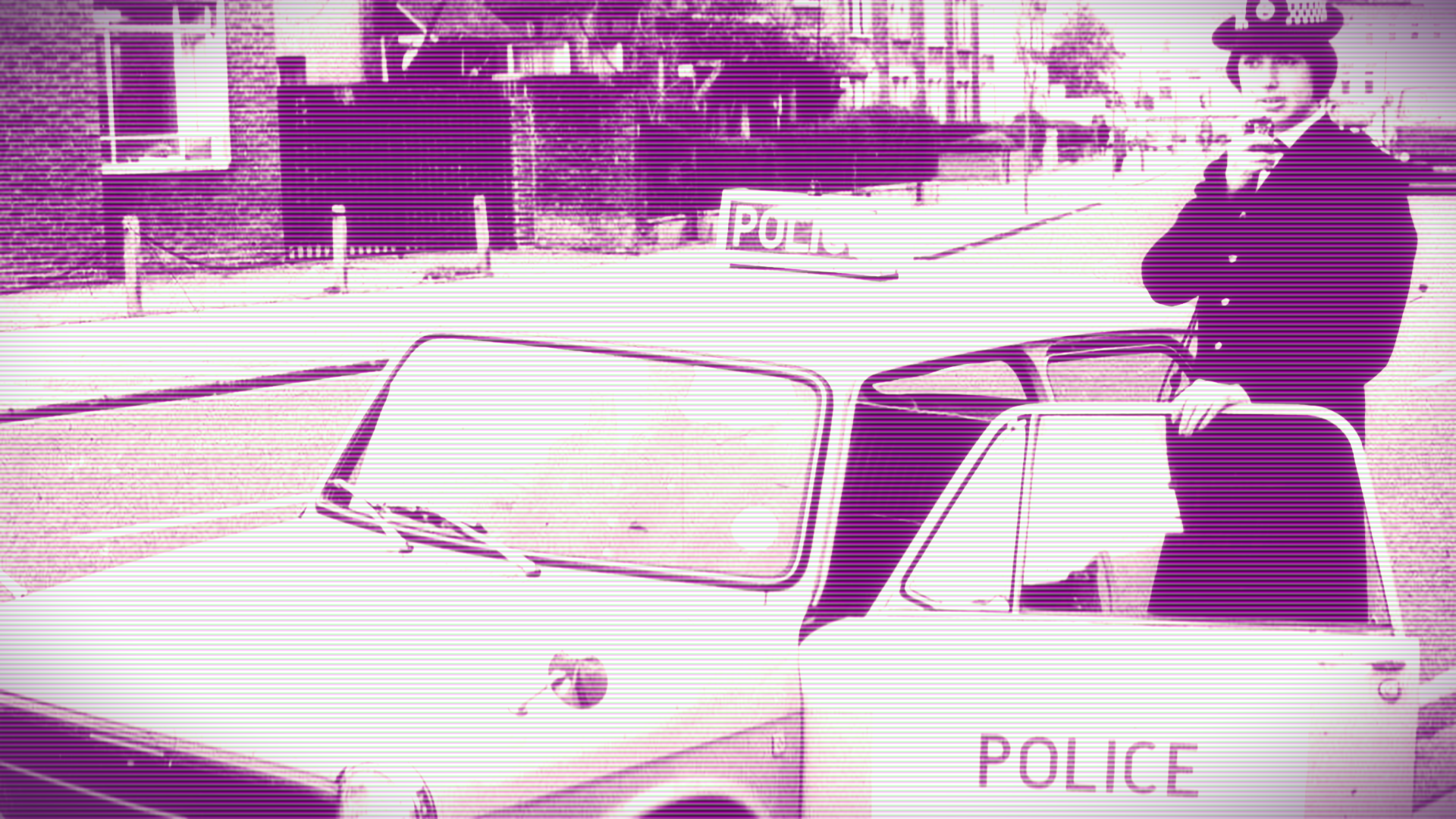
A Met Police WPC in the 1970s (Metropolitan Police)

Subscribe to podcast:




Transcript
This is Punching Upwards, episode 16 for the 28th of December 2025. Met Police to Stop Non-Crime Arrests. Broadcasting from Düsseldorf, Germany and wrapped in a bunch of sheepskins, this is your host Fab. Welcome to Punching Upwards.
For the last episode of the year, I want to do something that’s been long overdue. Revisit the very first episode of the show and talk about what has happened since then. You might remember, at the beginning of September, Irish comedy writer Graham Linehan was arrested while flying into Heathrow Airport from the US for a court appearance. Turns out that London’s Metropolitan Police had arrested him because of a number of tweets that contained, in air quotes, hate speech, as they put it. If you want the details of what happened in September and the rundown of the whole backstory of this arrest, please listen to episode one of the show, which came out on the 14th of September. You can find that episode by going to fab.industries/podcast.
As a consequence of this arrest of a beloved television writer, one who isn’t even a British citizen and who’s been very eloquently explaining his viewpoint against what he perceives as a stifling orthodoxy of opinion regarding gender issues, the Met was quickly pressured into admitting that the laws that forced them to arrest Linehan probably needed to be reviewed. I talked about this in the initial episode of the show.
Then, in October, the press reported that the Met would stop policing of these so-called non-crime hate incidents and that the investigation into Linehan had been dropped. Here’s a report from ITV News from the 20th of October:
Now, the Metropolitan Police says it will no longer investigate what it calls non-hate crime incidents. The force said it doesn’t want officers policing what it called toxic culture war debates. It follows the decision to take no further action against Father Ted creator Graham Linehan over posts that he made on social media when Neil Connery is outside Scotland Yard. Neil, this is a really significant change in policy, isn’t it?
It is, Mary. You’ll remember last month that the comedy writer was arrested by armed police at Heathrow after returning from Arizona. The focus was on three posts that he’d written on social media about transgender issues. Now, Graham Linehan said in a post today, the police have informed my lawyers that I face no further action in respect of the arrest at Heathrow in September. With the aid of the free speech union, I still aim to hold the police accountable for what is only the latest attempt to silence and suppress gender-critical voices. Now, it’s understood that the Crown Prosecution Service reviewed the evidence and concluded there was no realistic prospect of conviction. Now, the Free Speech Union said they plan to sue the Metropolitan Police over Linehan’s wrongful arrest. They said in a statement the police need to be taught a lesson that they cannot allow themselves to be continually manipulated by woke activists. Now, this evening, the Metropolitan Police said it will no longer investigate non-crime hate incidents. It said this will provide a clearer direction for officers.
So this was in October or at the end of October. And interestingly, after this announcement, the number of people arrested in the UK under these charges actually rose, though. But now, shortly before Christmas, the UK’s Home Secretary, Shabana Mahmood, who’s been in office since the 5th of September, announced that the whole non-crime hate incident system, as she called it, is to be scrapped for what she called a, quote, common sense approach. In January, the College of Policing and the National Police Chiefs Council are set to publish plans on how to accomplish this, which Mahmood will back in Parliament.
This is said to be a direct consequence of the public outcry after the Linehan affair. Police leaders are now proposing a quote common sense approach as a replacement for the previous policy. This would only record serious incidents such as antisocial behavior while treating routine reports as intelligence and using a quote common sense checklist before action is taken. The change would require retraining of police call handlers and offices in England and Wales, and excluding records from crime databases means they will no longer appear in job application background checks. Senior police figures, including Med Chief Sir Mark Rowley, Chief Constable Gavin Stevens and Sir Andy Marsh, have urged legal changes, submitting a review to the Home Secretary, saying that these so-called non-crime hate incident rules are no longer fit for purpose.
Here’s an analysis on what this might mean from GB News from the 23rd of December, where they talked to former Conservative Party policy advisor Lauren McEvitt:
Police are preparing to scrap what they call non-crime hate incidents, admitting that the system of arresting people for comments deemed hateful is no longer fit for purpose.
But there is a twist. Research shows that after the Metropolitan Police first announced the plans in October, the number of arrests rose by roughly 15%. So will the new common sense system really support free speech or are critics right to raise concerns about potential loopholes? Well, let’s have Lauren McEvitt’s advice on this or her views on this. She is a political commentator. Well, Lauren, what do you think?
I think I’ve got a cough like everybody else in the country. I think these were introduced in 1999, so far, far previous to the introduction of social media into sort of widespread usage.
GB News is a somewhat newer, I think, right wing television video … I think they’re a television station um in the UK. I’m actually not quite sure because I don’t watch any television um but this was I’m using this clip because it was the only sensible analysis I could actually find by a television or radio station on the internet. I have uh quite a few sources on this that I’ve put in the show notes as usual you can find those at fab.industries/podcast and there’s always on every episode there’s a sources section and I’ve linked some news articles in there but this is the only like spoken word um analysis that I found that was reasonable.
These were introduced in 1999, so far, previous to the introduction of social media into sort of widespread usage. They came out of the Stephen Lawrence inquiry as a type of action that could try and intervene in significant racism before things got to a hate crime level. And I think that they don’t withstand the alteration and discourse that’s moved into social media. The police don’t really have the right to say we’re not doing it anymore. The difference in this time is the Home Secretary leading and saying, no, we’re going to, from the Home Office point of view, we’re going to alter this.
So I can understand how it is that the police, particularly the Met, made an announcement in October, and then things didn’t go that way, because they actually don’t direct policing policy, they enact policing policy. So the fact that the Home Secretary is now saying, no, it’s time to look again at these, very clearly they’re not working,
I think is an important step for the government to be taking. It is strange, though, that the arrests have gone up after having said, let’s take a common sense approach, that obviously, as you said, they do have to enact policy. But at the same time, you would think that they would say, right, we’re going to do this, so why don’t we start now and stop arresting so many people?
You would think, but that would not be in keeping with how most policing ends up working, which is to say, well, we’re going to do this, and then the wheels absolutely fall off as soon as they try to actually do it. So I think these are very difficult things for individual coppers on the ground to work out should they or should they not be doing. They’re responding to calls without having had a directive that actually overturns what they’re responding to calls on.
And so it’s all very well for a police chief to say, yeah, we’re not going to do this anymore. But until there’s an actual policy shift from the Home Office. It actually needs to be a directive. Exactly. It’s all talk until the Home Office decides that it’s going to alter its cause.
I found this quite interesting, quite enlightening. She explains very well how this, you know, how first the … I mean, I talked about on the first episode of the show, actually, where I talked about this topic, that the head of the Metropolitan Police had already said at that point that this wasn’t a good idea, you know, after the Linehan thing went viral, basically, across the internet. And so I didn’t obviously do an episode in October, when this was kind of officially said by the Metropolitan Police, but I like her analysis of how and why there were still more arrests after that and why it is actually significant that the Home Office now said the same thing … and the different aspects there.
I would also like to have a, you know, just a quick comment here that I find … I mean this is a general observation but I find it interesting that the right-wing media is kind of like in the US now um the kind of source for criticism of stuff like this. Where I’m you know in the if I think back um on the last like 40 years of my life um or probably I mean this has changed quite a few years well quite a few maybe in the last five years probably since 2016 um since the whole Trump thing came up but like it used to be before that it used to be the um left wing media that was kind of critical of stuff like this and the right wing used to be the ones that wanted the police to just police more and police everything and have more control. And once again, I find it interesting that this is now shifted and that you now have to go to outlets like GB News to get this coverage, to get good analysis of this.
Whereas the legacy media basically just, I mean, in this case, quite a lot of them reported this, but they straight just reported this. They didn’t have any analysis like this. And they didn’t have any commentary on why this is maybe a good idea or, you know, why the policy in itself needed to be changed. But now to some commentary from me on this. It’s kind of obvious that after Linehan brought this whole madness to the attention of the public in the UK, enough sane people obviously caused a ruckus so that now finally some positive change is taking place. We will, of course, have to see what the new rules actually are when they come out. And I will stay on this topic and continue my reports on this, of course. It is worrying that the government in the UK doesn’t seem to want to scrap this idea altogether, but instead wants to replace it with something else.
Because, you know, quote, common sense system sounds all well and good, but in the end, you know, we don’t even know what that means. After all, the stuff they did to Linehan and, you know, more quietly to many other ordinary citizens was also the idea of common sense to someone. So common sense in itself is kind of meaningless, a meaningless phrase. In the end, governments enact these laws, not because they suddenly subscribe to some … as some would call it, woke ideology or because they want to make the world a better place. They like these ideas or these systems because it gives or they give them control.
They can and will use systems like this against people who speak out against the government or who voice ideas that the government doesn’t like. I personally think the whole idea of the police investigating anything non-crime, as they call it in the UK, is stupid and very dangerous. The police exists to fight crime, and only crime, anything that isn’t crime, shouldn’t concern them. I also find it questionable that even after these changes, the Met is apparently still collecting information like this, as they call it, intelligence. Why? Why do they do this? The police shouldn’t be collecting intelligence. They are not an intelligence service. The police should only investigate crimes.
If information is important for such an investigation, they should collect it. If it is not, it doesn’t concern them. Tasking the police with collecting intelligence blurs all kinds of lines and gets them involved in things that shouldn’t be their job to look into. And I would also think that any police officer worth their salt would agree with this. It has to be a right nightmare for these people to suddenly have to decide what is proper and what’s not and then arrest people based on that. And Linehan’s account of his arrest that I partially read out in episode one would suggest that this is the case.
The police officers in his case, obviously, he was involved with some of them obviously voiced the same opinion that they thought this was crazy because you know you sign up to be a copper and to fight crime and suddenly they have you investigate non-crimes and policing people’s opinions that has to be a proper nightmare for anyone who’s passionate about you know proper real police work I’ve talked a few times on the show already about how impossible it is to figure out speech rules on emotions like hate. What is hate to one person is incredibly funny to another. And let’s not even get into figuring out what’s meant as sarcasm on the internet and what’s not. Anyone who seriously wants to get involved in this is either proper mad or completely blinded by their biases and ideology to the point where they’re just not living in the real world anymore.
This whole debacle just shows what a bad idea it is to get the police involved in threatening or even arresting people for speech. We can only hope that other countries, including Germany over here where I am, learned from the unfortunate example the UK set for all of us right there in this whole situation.
Well, this is it, the final episode for the year. So thanks to Michael Mullan-Jensen, Fadi Mansour, and Evgeny Kuznetsov for subscribing to the podcast on Substack and for supporting it financially. Additional thanks to Sir Galteran, who continues to provide financial backing via Fountain.fm.
If you want to join these good people in making sure that I can keep making these episodes, head to fab.industries slash podcast. There’s all the information on there. There’s a link to all the episodes as well. It explains the whole Substack subscription and how you can help me make this worth my while, and I appreciate that.
There’s also contact details on there, and I would be happy if you get in contact. Maybe just… to tell me that you like the show or you could give me feedback on what I can improve. I promise you I’m very open to criticism. I will listen to it, especially if it’s voiced respectfully and nicely. You’ll certainly have my ear there. Also, if any of you have any things you would like investigated or any news stories that you think are undercover, even if they’re old, they might be a few months old, I am not averse on going back on things, especially if they haven’t been covered or haven’t been followed up on. I would very much appreciate input from you on what should be on this show, because I think, you know, as a listener, you should be should be involved. And, you know, this is what what differentiates podcasts like this from the legacy media. You know, if it’s done well, I think, you know, people who do podcasts can listen to their podcasts. Listen to the listeners yeah and you know we can we can be proactive and look I would like to look into the things that you find interesting so you know go to fab.industries/podcast and get into contact I would like that very much.
Thanks for listening to this episode of Punching Upwards. The theme music, as usual for this podcast, is a track called Fight or Fall by Dev Lev, which I’ve licensed. I will be back in the new year with more news analysis and coverage of the most important stories and those the legacy media neglects for some reason or another.
Until then, goodbye and a good slide into the new year, as we say here in Germany. Guten Rutsch! This has been Punching Upwards, a podcast by FAB INDUSTRIES. New media, new rules.
Clickable transcript on Substack episode page
Credits
Thanks to Michael Mullan-Jensen, Fadi Mansour and Evgeny Kuznetsov for subscribing to the podcast on Substack and supporting it financially! Additional thanks to Sir Galteran who continues to provide financial backing via Fountain.fm!
See Also
Sources
- Met Police says it will no longer investigate “non-crime hate incidents”, ITV News, 20 October 2025
- Former Conservative Adviser Lauren McEvatt shares her view on the Home Secretary’s new “common sense” system, which will aim to scrap non-crime hate incidents, GB News, 23 December 2025
- Non-crime hate incidents to be scrapped, The Telegraph, 22 December 2025
- Scrap non-crime hate incidents, police leaders to recommend, The BBC, 23 December 2025
- Non-crime hate incidents should be scrapped, police leaders say, Sky News, 23 December 2025
The theme music for the podcast is a track called Fight or Fall by Def Lev. Find out more about the show at fab.industries/podcast — new media, new rules!
28/12/2025 — PU 0016: Met Police to Stop Non-Crime Arrests
21/12/2025 — PU 0015: State Secret or Vibe Physics?
14/12/2025 — PU 0014: Chat Control is Back
07/12/2025 — PU 0013: The Cosmic Ray That Broke the A320
30/11/2025 — PU 0012: No Such Thing as Free Speech in Germany
23/11/2025 — PU 0011: What Happened to UPS Flight 2976?
16/11/2025 — PU 0010: The Great Canadian Ostrich Massacre
09/11/2025 — PU 0009: Your Bus is Controlled by China
02/11/2025 — PU 0008: Robotics Slop
26/10/2025 — PU 0007: Von der Leyen’s Paper Maps
19/10/2025 — PU 0006: Chat Control Denied
12/10/2025 — PU 0005: The Modern Solution Case
05/10/2025 — PU 0004: Drones over Denmark
28/09/2025 — PU 0003: An Ethical Approach to the War in Gaza
21/09/2025 — PU 0002: The Assassination of Charlie Kirk
14/09/2025 — PU 0001: The Arrest of Graham Linehan