
PU 17: Vlad vs. Vlad
An overview of the background and the history of the War in Ukraine. Plus some analysis of what will happen next. Does peace between Russia and Ukraine have a chance at all?
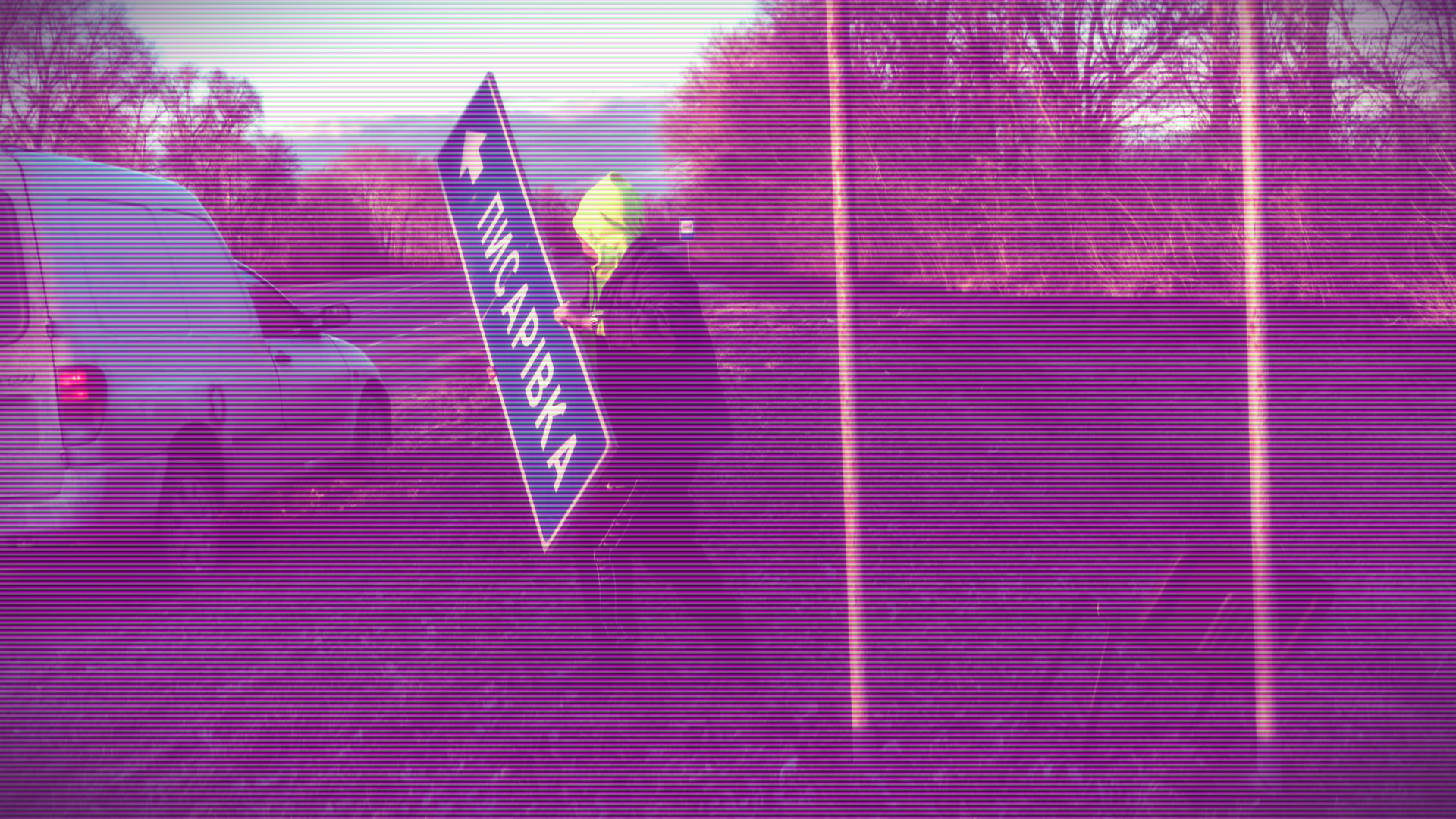
A Ukrainian civilian disassembling a road sign to comply with a national directive to hinder the progress of the Russian invasion in 2022 (Brendan Hoffman / The New York Times)

Subscribe to podcast:




Transcript
This is Punching Upwards, episode 17, for the 4th of January, 2026: Vlad vs. Vlad.Broadcasting from Düsseldorf in Germany, where it has been snowing all day, this is your host Fab. Welcome to Punching Upwards. On this episode, I’m going to address the War in Ukraine.
I had this topic on the docket for a while and it took me several weeks to prepare this episode. So better settle down in your favorite chair with a hot beverage or something, because this is going to be a long one. Before I get into this topic, which is obviously very contentious, I want to point out that, similar to my episode on the War in Gaza, I’m really not picking a side here. As someone who has studied history, and especially the history of wars extensively, I know that things are never as easy as this side started it, that side is in the right, and so on. We’re not in kindergarten here, after all. This is not how history works in the real world.
Yes, there’s always one side who starts the war, but there are always also reasons for it. And sometimes you don’t even really know who started it. Take World War I, for example. Did Serbia start it by assassinating Archduke Franz Ferdinand? Or was it Bosnian rebels? Was it Austria? Was it Germany? Was it all of the major European powers together because they all wanted a war anyway? Even World War II isn’t a clear-cut case, once you realize that Britain would have been totally fine with Hitler’s attack on Poland if they had believed Hitler would have attacked the Soviet Union next. And the Soviets supported the German annexations anyway, until Hitler turned his gaze eastwards. History could have turned out very differently, and our perception of these events is always very much shaped by the outcome as history is written by the victors. An alternate history where Germany left the West alone, attacked and beat the Soviet Union with the help of Britain and France isn’t as implausible as you think, and neither is the idea that history might have turned a blind eye to the Holocaust in this context.
So therefore, I’m not judging who’s in the right in this conflict either. Russia clearly opened the hostilities, but they had good reasons to do so from their perspective. The eastward extension of NATO was clearly unacceptable to them, and they stated so for years. And NATO chose to ignore this and basically begged the Russians to react. While the Russian annexations and meddling in 2014 was clearly unacceptable, the US meddled just as much in Euromaiden and the treatment of the Russian-speaking population in eastern Ukraine was also intolerable. While Putin is clearly an authoritarian autocrat, Zelensky has lost the popular support of his electorate, suspended elections and and seems as hell-bent on murdering young men over principles and spheres of influence as Putin is.
In this fight of Vladimir Putin versus Vladimir Zelensky, Vlad versus Vlad, as I like to call it, I’m not picking a side. I am trying to report as objectively as possible about what is going on. Which is very hard to do, of course, because despite an unprecedented flood of images and videos from the front lines, there is clearly very little information you can depend on. Instead of sending people to do reporting from the ground, the legacy media is relying almost exclusively on blatant propaganda published by the Ukrainians or NATO. So in a choice between this and the blatant Russian propaganda from their state media, it is very hard, almost impossible, to form a coherent, reliable picture of the situation. I have nonetheless tried, and I’ve tried for years. Getting away from the relentless, meaningless minutiae reported in the legacy media, here’s my attempt at a bird’s eye view of the conflict in Ukraine from its start in 2014 and the background leading up to it to where we stand today. And what the way forward might be. And I’m doing this now because looking at the current news, it is obviously very timely. But I think it is also very important that people understand how this whole thing started. And to get a few facts straight that most people seem to have forgotten, mostly due to the coverage in the legacy media.
So let’s get into the background of the conflict here. In January 2010, Viktor Yanukovych wins the election for Ukrainian prime minister against incumbent Yulia Timoshenko. Yanukovych departed from the policy of his predecessors by stating publicly that Ukraine’s relationship with NATO was fine as it was and that he was not seeking closer collaboration with the Western military alliance. Economically, he was aiming for a balanced position with equal trade relations to Russia and the EU, which seems reasonable giving Ukraine’s geographic position right between the two power blocks. Vladimir Putin, Russia’s president, had been on record since at least his speech at the Munich Security Conference in 2007 for his stance that NATO’s continued eastward expansion was unacceptable to Russia’s security interests. In the following year, he reiterated that a Ukrainian NATO membership was a major red line for the Russian government.
Despite the stated policy by the Russians and apparent agreement to this by Yanukovych, during the first years of the Yanukovych government, the EU and US worked to position Ukraine for a closer economic association with the EU and to strengthen its military ties to NATO. In 2013, the Ukrainian parliament signed a free trade and economic association agreement with the EU. Russia’s government was opposed to this agreement and pressured Yanukovych to prevent it. In November of 2013, Yanukovych decided not to sign the agreement with the EU. This sparked a massive wave of protests in Kiev, dubbed Euromaidan in the West and the Revolution of Dignity in Ukraine.
These protests were portrayed by Western media outlets as a spontaneous democratic uprising by the people against a corrupt government taking over by Russian interests. Others saw it as a color revolution initiated by the US State Department with the help of EU politicians and CIA operatives on the ground. The second view of the situation was lent credence by a phone call between US State Department officials that was intercepted by Russian intelligence services and published by the Russian government. It is mostly remembered for Victoria Nuland’s unprofessional outburst of fuck the EU, which the legacy media concentrated on. What is much more important about it, however, is that it clearly shows how much US and EU leaders behind the scenes were meddling in the Ukrainian revolution of late 2013, early 2014. They were clearly countering Russian meddling with much the same tactics.
And here’s a report back from the 7th of February 2014 about this leaked phone call from Victoria Nuland:
What appears to be a hacked phone conversation between top US officials about Ukraine, in which the EU is dismissed in crude terms, has been posted on the Internet. The comments are attributed to the US Assistant Secretary of State, Karen Nuland, who met President…
I don’t know why they call her Karen Nuland in this report. It is clearly Victoria Nuland. They even show her in the footage. This must have been just a mistake at the time. I find it kind of funny because Victoria Nuland actually seems to be kind of a Karen. So maybe this was just a Freudian slip.
…posted on the internet. The comments are attributed to the U.S. Assistant Secretary of State Karen Nuland, who met President Yanukovych and opposition leaders separately in Kiev on Thursday. The date and precise context of the recording are not known. Nuland and the U.S. Ambassador to Ukraine, Jeffrey Pyatt, discuss which of the country’s opposition leaders they’d like to see in government, and they refer to getting the UN involved.
So that would be great, I think, to help glue this thing and have the UN help glue it. And, you know, f**k the EU.
No, exactly. And I think we’ve got to do something to make it stick together because you can be pretty sure that if it does start to gain altitude, the Russians will be working behind the scenes to try to torpedo it.
The video has a transcript in Russian. The U.S. State Department said it didn’t know where the recording came from, but it criticized Moscow for publicizing it while being suitably contrite towards the EU.
We work incredibly closely with the EU and with representatives of the EU. And Assistant Secretary Nuland certainly does as it relates to Ukraine. And she’s been in close contact with EU High Representative…
This is Jen Psaki, by the way, who back then was a spokesperson of the White House and now is obviously a host for MSNOW and has her own, I think, two television shows. MSNOW is the renamed MSNBC.
…Ukraine, and she’s been in close contact with E.U. High Representative Ashton. Also, let me convey that she has been in contact with her E.U. counterparts and, of course, has apologized.
A spokeswoman for the E.U. foreign policy chief told Euronews that Brussels wouldn’t comment on a leaked alleged phone conversation. The video clearly aims to embarrass the U.S., echoing Moscow’s accusations that the West is meddling in Ukraine.
I also didn’t censor this phone call. She said, fuck the EU. But the real significance of this phone call is the fact that it clearly shows US State Department officials discussing who should be in charge in Ukraine as if they were in a position to decide it. It seems to put a lie to the illusion of a democratic Ukraine with a population in the position to decide its own fate, at least in 2014.
Amongst snipers from the Ukrainian Spec Ops Brigade Berkut, the Ukrainian version of the Russian OMON, which stands for Utryat Mobilny Ozobogo Naznachinia, which are special police forces for countering terrorism and organized crime, so amongst snipers from those Burkut brigades shooting protesters and reportedly other police operators, the protests in Kiev fell into chaos. Interestingly, a large number of Burkut personnel would a few months later defect to Russia and be integrated into the Russian National Guard, or Federal Naya Sluzba Voisk Nationalnoi Guardi, that was formed in 2016. In hindsight, it seems to be a given that the Russians used Berkut to try to sabotage the protests in Kiev. This notwithstanding, as a consequence of the protests, the Ukrainian government resigned on the 28th of January 2014.
Yanukovych had to flee Ukraine for Russia in February and the Ukrainian parliament voted to remove him from office. Yanukovych stated that he remained in office and a number of political leaders in eastern Ukraine declared to stand with him. This led to pro-Russian counter-protests to the revolution in Kiev, which were centered on the Donbas region of eastern Ukraine. The majority of the predominantly Russian-speaking population there, many of which have strong family and cultural ties to Russia, did not agree with the pro-EU revolution that had taken place in Kiev. Especially a resolution by the parliament a day after Yanukovych had been chased out of the country to revoke the status of Russian as an official language in Ukraine caused a huge amount of anger in the east of the country.
And now we get on to the outbreak of the war in 2014. Five days after Yanukovych had fled Ukraine, on the 27th of February 2014, unmarked soldiers in what looked like Russian army gear, camouflage and equipment usually in use by the Russian armed forces, invaded the Crimean Peninsula. These little green men, as they were soon called, later turned out to be Russian special forces. At the time, Russia denied all involvement, claiming these were local militias, which was obviously untrue to anyone who knew anything about Russian military gear, say from video games. These forces seized Crimea, evicted the local government and installed a pro-Russian government loyal to the Kremlin. This action started the war in Ukraine. On the 1st of March, the Federation Council of Russia approved the use of regular military units in Ukraine. Crimea was officially annexed into Russia on the 18th of March, for the second time, the first time being in 1783.
Ukraine ordered its remaining forces to withdraw, effectively surrendering Crimea to the Russians. In response to this, NATO began to train the Ukrainian army and massively built up both its equipment as well as the training of its officer corps over the following years. In April of 2014, government buildings in Donetsk and Luhansk were stormed and both regions declared, quote, People’s Republics, proclaiming their independence from the rest of Ukraine. The Russians took control of the separatist movements and began bolstering them with soldiers and equipment from its army. The anti-government protests in Donbass developed into a full-armed conflict between these Russian-backed separatist groups in Donetsk and Luhansk.
The Russian strategy for this initial conflict was to not declare all-out war, but instead to use a modern strategy of disguising army units as irregular fighters and deploying PMCs, that’s private military companies, instead of official army units. They trained and equipped separatist fighters in Donbass and directed them via special forces and ex-intelligence officers like Igor Strelkov Girkin. According to reports, these Russian-directed units, which were often infiltrated into Donbas via Crimea, raided local police and security service headquarters to keep the conflict with the Ukrainian forces going. The Russian military deployed around 40,000 regular military troops across its western border with Ukraine. This was most likely done to threaten an invasion in the case of a full-scale response of the Ukrainian military to the Russian-backed irregular forces in Ukraine. This meant that Ukraine’s response to these guerrilla strikes was reduced to deploying anti-terrorism forces.
In any case, the bad state of the Ukrainian military at this point, this was before the Ukrainians had received significant training and materiel from NATO, meant that they were no match for the separatist units, which were in effect crack Russian spec ops forces led by men well-versed in these kinds of operations that the Russian military had engaged in back in the Chechen and Georgian conflicts. As the summer of 2014 approached, Ukrainian forces got more organized and started to gain ground in the Donbass. At the end of July, Ukrainian units were threatening Donetsk and were pushing to control Ukraine’s eastern border with Russia. In response, Russia started to deploy more and more regular army units, still disguised as local separatists. These were said to be, quote, on vacation from their normal army duties. From August 2014 onwards, the Russians dropped their guise of irregular troops somewhat and started to more obviously use units that were clearly regular military, if equipped with somewhat outdated equipment from Soviet times. To push for what they called a liberation of the Donetsk and Luhansk People’s Republics. With this push, the Russians regained control of the eastern part of the Donbass, east of Donetsk and Luhansk.
The war began to grind to a standstill, and on the 5th of September 2014, the Minsk Protocol was signed. It agreed to a ceasefire in a buffer zone and a line of demarcation between the Ukrainian-held territory and the territory held by the Russian-backed separatists. Clashes continued, however, and on the 12th of February 2015, the second Minsk agreement was signed. The war then settled into a static trench warfare along the line agreed in the Minsk agreements. Both sides began to fortify their positions and engage in sporadic artillery duels and special forces raids. The US training and equipment of the Ukrainian soldiers became more and more obvious to observers as they started to use Western Multicam uniforms and NATO pattern helmets and body armor.
It later came out that the Obama State Department actively pressured the Ukrainians not to engage in a full-out war in Donbas out of fear of Russia’s response. The CIA also reportedly thought the Ukrainian armed forces were too few, too badly equipped and above all too badly trained to engage with regular Russian forces directly. The Obama White House therefore began a policy of trying to contain the war in Ukraine, keeping it simmering on the down low and to use the time to train and equip the Ukrainian army. Keeping the war simmering at a low level was seemingly also Putin’s agenda, as he was obviously avoiding a full-scale deployment of regular Russian troops, a move that would probably have ended the war very quickly in 2014. By and large, the war in Ukraine received remarkably little international attention between 2014 and 2021. With the one exception of Malaysia Airlines Flight 17, which was downed by a Russian Army Buk anti-aircraft missile system operated by separatists on the 17th of July 2014.
With the exception of the downing of this Boeing 777, the Western media and public didn’t care much about what was happening in Ukraine. Especially the lack of media coverage, probably no coincidence, seeing the contrast to what has happened after 2021. It coincided remarkably well with the policy of the Obama White House and, probably unintentionally, with that of the Kremlin. I like to call this phase of the conflict the Quiet War, because nobody really cared that there was a war going on at this point. All of this changed, of course, on the morning of the 24th of February 2022.
After eight years of war, the conflict and the public’s perception of it changed overnight. Before what became known as the, quote, full-scale invasion started, to many even today wrongly understood as the beginning of the war in Ukraine, there were many signs that the conflict was shifting. Russian leaders stated that they actually thought the threat of Ukraine entering NATO was increasing. Even though NATO didn’t seem to be acting on Ukraine’s repeated requests to join the alliance, the training and supply of the Ukrainian armed forces by NATO countries was obviously a thorn in the side of the Kremlin, and a number of Western political analysts predicted, based on Putin’s previous behavior in such situations, that he was more likely to double down and act aggressively than to remain passive in a situation where he perceived the Americans to be slowly gaining the upper hand in this proxy war. After the end of the first Trump presidency, with an obviously weak and indecisive Joe Biden at the helm in the White House, Putin seemed to have perceived an opening.
In early December of 2021, the US intelligence community released material, most likely from CIA analysts, that showed a massive buildup of troops on Russia’s western border. Even though Russian officials denied this, Russia was clearly preparing to cross the border in Ukraine with regular military units in force. Meanwhile, the current Ukrainian president, Vladimir Zelensky, who had won against incumbent Petro Poroshenko, the US State Department’s pick during the Euromaiden revolution in 2019, didn’t believe the Russians would shift the war to a new level and prepare a full military invasion. Zelensky, a comedian who had risen to fame by playing a comedian who becomes Ukraine’s president in a popular TV show, won on a platform of ending the war diplomatically. In the second head-to-head runoff election against Poroshenko, Zelensky actually received the biggest majorities in polling stations in the east of Ukraine, as opposed to the area around Kiev or the west of the country. Presumably because the largely Russian-speaking inhabitants of the eastern regions believed him when he said he would end the war. At this point in time, it was presumed that peace would come about by the Ukrainian government granting the Donbass, or at least the areas occupied by Russia, some measure of autonomy. Or even by ceding them completely to the Russians in all but a name.
But when the Russian army crossed the border into eastern and southern Ukraine in the early morning of the 24th of February 2022, Zelensky’s attitude changed as quickly as the West’s perception of the war. Initially, as surprised as his European allies, Zelensky almost immediately rebranded into the fearless war leader we know today. He immediately ditched his suit for a Ranger green assault shirt with a nationalist Ukrainian symbol on the heart, and much like his counterpart in the Kremlin, doubled down on war at all costs. Initially, it looked like the Russian motorized brigades would simply roll from Belarus in the north, Russia in the east and Crimea in the south, straight through to take Kiev. This was obviously Putin’s plan. Decapitate the Ukrainian leadership or force it to flee, before the Ukrainian army, which was obviously caught flat-footed despite of the CIA intelligence, could organize a proper defense. This failed.
Much like Stalin, in his attempt to take Finland, Putin obviously underestimated the Ukrainians. This became obvious when in both cases Russian convoys were destroyed, and the Ukrainians, just like the Finns before them, found gear that had obviously been loaded onto the trucks and to prepare for the almost immediate victory celebrations the Russian leadership expected. Instead, the Ukrainians rallied and managed to break the Russian push for Kiev. Amongst other things, with the help of courageous Ukrainian partisans who sabotaged roads and dismantled signage to slow the Russian progress. The fact that the Russian supply train was very stretched by the fast push and in places barely defended didn’t help the Russian cause. The Ukrainians successfully defended Kiev and then, during the course of the spring of 2022, first pushed the northern front back into Belarus and then halted the Russian advance in the east and south. By fall of 2022, the Ukrainians had re-established almost a complete northern border all the way into the Donbass and had pushed the front in the south back to the Dnieper.
In December of 2022, the front hardened into essentially what it is today – Over the next three years, there would be pushes back and forth, including a Ukrainian advance towards Kursk in Russian territory, but things have largely turned into a very static trench war again, albeit with much, much more intensive fighting than in the quiet phase in 2014 to 2021. And of course, the second phase of the war has caused much more destruction and casualties, up to 30,000 a month on each side at times. Whereas there are estimated to have been around 15,000 deaths in the quiet eight years of the war, the death toll between 2022 and today stands at 1 to 2 million. With all the propaganda and limited actually verifiable information on this, it might actually be much higher though.
Currently, Russia holds Crimea and the two Donbass People’s Republics, plus large parts of the Kherson, Zaporizhia and Luhansk Oblasts up to the Dnieper River. After the Ukrainians managed to repulse the initial Russian push for Kiev, the reaction in the Western media churned from initial shock and resignation completely into an over-exaggeration of the opposite. Many legacy media outlets reported the Ukrainians would push the Russians out of Ukraine and end the war by the end of 2022. This was clearly part of the NATO press strategy. Years later, we found out that immediately after the Russian invasion, NATO started to coordinate the Ukrainian response from a base in Wiesbaden, Germany. Going as far as exfiltrating top Ukrainian commanders from the streets of Kiev, spec ops style, to bring them to Wiesbaden for meetings and to receive instructions. At times, NATO specialists were telling individual Ukrainian soldiers on the ground where to shoot. The Ukrainian military successes in the early phase of the invasion were revealed to be almost completely a product of NATO military intelligence and leadership. While Russia, despite their claims of a, quote, special military operation, totally not a war, had clearly shifted to an all-out conventional warfare in Ukraine, NATO was now conducting a proxy war, almost literally using Ukrainian units like pieces on a chessboard.
So with this historic overview, let’s switch to my analysis of the current situation. In February of 2022, after the Russians had launched their full military invasion, I estimated that this war would last at least another five years, to be followed by at least a decade or two of Cold War-like tensions between Russia and the West. Journalist colleagues I talked to about this laughed at me. For the past three years, I’ve been continually told by other journalists, quoting so-called experts, that Ukraine is at the brink of winning this war. Meanwhile, it must be obvious to anyone with studied history, especially of World War II and of Red Army operations, that it has never been possible for Ukraine to win this war. The claims of them just having to hold out, quote, until the Russian economy, society or their state collapses are equally ludicrous to people familiar with Russian history over the last hundred years or so. So where does this leave us? Taking into account the current situation on the ground, the fact that the Russians seem to have been having the upper hand for most of 2025, and Ukraine’s impending bankruptcy after Trump called a stop to the policy of giving the country US weapons for free – a bankruptcy that was only averted by the EU stepping in and now donating billions to the war effort in place of the US, it seems obvious that the Ukrainians have no hope of dislodging the Russians from the territory they occupy. Equally, the Russians have no hope of capturing Kiev and dislodging the Ukrainian government, not with the forces they are obviously willing to commit to the effort, nor with them having lost the propaganda war and all of the Western world seemingly being on the side of the Ukrainians.
I’m not sure if NATO is still as hands-on with the war effort after Trump shut down the Wiesbaden HQ, but it is safe to say that NATO probably knows they can’t dislodge the Russians and that even with seemingly endless weapon deliveries, the other important factor, Ukrainian manpower, will give out before the Russian will to fight breaks. It seems that both US and Russia want some kind of peace. UK and EU seem to be pushing Zelensky to continue the war. For what reason aside from an absolutely delulu assessment of the actual situation is beyond me, but that seems to be their goal. But with Zelensky losing support at home and discontent in EU member countries rising about austerity brought on by cutting off cheap Russian energy and spending billions on US weapon deliveries for Ukraine, it seems to be inevitable that this position must eventually give away to some kind of peace deal between Trump and Putin. Because, let’s face it, Trump was entirely correct when he told Zelensky that he has overplayed his hand. Ukraine is running out of manpower and eventually the European public will get tired of sacrificing its living standards for Ukraine that doesn’t even seem to be grateful for the sacrifice, let alone has at least somewhat of a humble attitude about it.
It will probably not be an actual peace settlement. Ukraine will probably have to give up the territory Russia holds now, de facto at least, probably not de jure, and NATO membership for Ukraine will be off the table permanently. Putin probably doesn’t care about EU membership for Ukraine at all, because if the EU is stupid enough to take another broken economy into the bloc, that it will have to spend years and countless trillions to fix, he might see that as enough of a punishment for the EU. And I would tend to agree, actually. There will probably be a permanent ceasefire and then a kind of DMZ like in Korea, maybe even with NATO troops on the Ukrainian side or maybe UN troops or something like that. And then the situation might persist for decades. But at least the killing will stop.
Generally, the legacy media is in full denial about much of this, continuing to feed their own delusion with Ukrainian and NATO propaganda instead of looking at the actual situation on the ground with a critical eye. One notable exception to the rule that I found is Andrew Rasiulis, a retired official for the Canadian Department of Defense, who has been on Canadian TV quite a bit, consistently providing quite reasonable analyses. Here he is on CTV News at the end of November talking about the peace process and the situation on the ground in Ukraine.
With me now is Andrew Rasiulis, retired official of the Department of National Defense. Thank you for joining us, Andrew.
Morning, Lauren.
So world leaders are saying that the U.S. peace plan needs work. What do you make of it? I think there’s some prospects here. Both sides would like to have a deal, but obviously it’s the terms.
But both sides are suffering. Ukrainians more than the Russians right now. The battlefield is favoring the Russians. So this is an opportunity for Ukraine to actually cut its losses and accept the reality of the battlefield. They may not like that. But if they can work out security guarantees, I think this is the key now. On the land side, you know, Ukraine has lost 20 percent of its territory. That’s a military fact. And they can’t regain it. They know that. Now, the question is, will they withdraw from the fortress belt, the Donetsk? That’s an interesting variable. We’ll see that. But I think a lot of discussions now in Geneva that are happening as we speak are about security guarantees for Ukraine. If they accept the battlefield reality, how can they defend themselves in the future against a potential Russian attack? And there will be no boots on the ground, but there could be things like Tomahawk missiles and sensors, other ways of enhancing Ukraine’s defensive position so that it would have a fighting chance and basically kind of securing a new Cold War reality, a frozen conflict, but we can all live with it.
Andrew, we saw Trump coming out on social media earlier today saying that Ukraine’s leadership has expressed, quote, zero gratitude for his efforts while a U.S. delegation is holding talks with Ukrainian officials in Geneva, as we said. What do you expect to come out of all this and what do you make of Trump’s comments?
Well, Trump makes all sorts of comments, so I won’t comment on that comment. What I will say, though, is I think that the officials in Geneva now are really trying to figure out a way, a pathway forward on the security guarantee element. Again, I think that’s where the negotiations are. Territorially, as I say, it’s pretty much settled on the battlefield. But how much room, like the size of the Ukrainian forces, you know, there’s talk about caps, the 600,000, maybe there won’t be a cap, that kind of thing. I mean, you know, but certainly there’ll be no boots on the ground. The Russians would never accept that. So it’s what’s acceptable for Ukraine, what’s acceptable for Russia, can both live with that. Or, because the alternative is more war. And you go into 2026, both sides fighting it out. Again, remembering the Russians have the offensive momentum. So the battlefield continues to favor the Russians. That’s a reality.
We know that Prime Minister Carney had a lot of feedback on the peace plan. What role does Canada play in these talks, if any at all?
Unfortunately, Canada’s role is not as great as it could have been. Historically, Canada has a more objective view on conflicts, and Canadians try to go back and forth between the various sides. Unfortunately, in this war, Canada has decided to take 110 percent backing of the Ukrainian position, which means we don’t really talk to the Russians. We only enhance or repeat or echo the Ukrainian position. So we’re not the kind of helpful fixer, the negotiator, the person, the country that’s trying to figure a way out forward. A practical solution is what normally Canada does. In this case, we’ve been simply echoing the Ukrainian position, and we’ve therefore ruled ourselves out of an effective role.
Okay, well, we hope to see some positive progress coming out of Geneva. Thank you, Andrew. That is Andrew Rasiulis, retired official of the Department of National Defense.
In another comment from a few days ago in response to the latest meeting between Trump and Zelensky, Rasiulis says we are now in the endgame for the peace talks. He essentially says the Ukrainians know that they’re losing and it is now down to convincing Zelensky to stop sacrificing his people for some land that was lost as soon as the Russian army crossed the border. Harsh, but I think he’s correct.
As the push for peace continues, Russia says its troops have captured multiple settlements across eastern Ukraine. Russia’s defense ministry says forces captured six new settlements in the country’s east, including in the Donetsk region. All of this happening as work is underway in Ukraine to repair power lines near a nuclear power plant in the country’s east. And officials say power was restored to more than a million households in and around the capital of Kyiv a day after a massive Russian drone attack. With us now is Andrew Rasiulis, retired Department of National Defense official, to discuss this a little bit more. Andrew, welcome to the program.
Thank you, Johnny.
What are you going to be watching for in Trump and Zelensky’s meeting in Florida today?
Well, the big thing is, will Trump be satisfied or can they bridge the gap on things like the territorial questions and the security guarantees? Those are the really top two. There’s a bunch of other stuff. But basically, Trump needs to be convinced with Zelensky that there is a package that then Trump can give to Putin with a realistic expectation that there will be a positive dialogue with the Russians as opposed to the Russians simply saying this is not acceptable here’s another counter proposal, maybe we’ll talk some more. So the question is can they bridge those gaps and as I said the gaps are over territory, the demilitarized zone potential, and security guarantees that is legally binding security guarantees that Zelensky wants to hear from Trump personally. And that, I think, is the real bottom line of this meeting today.
Andrew, what sort of psychological hurdle is there to overcome here as well if Russia keeps saying that it wants to win this war militarily?
Well, that is the reflection that this is a war which is being settled effectively by force of arms. And that kind of talk that, you know, we’re going to use military force until we get what we want comes from the Russians because the Russians right now maintain an offensive momentum. It’s slow, it’s grinding, but they have the momentum. And that’s why the Ukrainians, which are on the defensive, keep asking for a ceasefire unconditionally or as soon as you can, because they’re in effect losing.
Yesterday, Zelensky made a point of stopping in Canada on his way to this meeting in the U.S., and we did see some new support announced by the prime minister. But I wanted to ask you about that conversation between Carney and Zelensky. Should it be seen as any kind of signal ahead of today’s meeting, or should this be looked at as a separate conversation?
Well, it was a signal directly related to the meeting in Florida. I mean, what Carney was doing, and he’s also speaking on behalf of the Coalition of the Willing, that, you know, they have the … Ukraine has the backing of the Coalition of the Willing, Canada, Europe. And he’s going into a very tough meeting today. And he’s got a very tough negotiation ahead of him. And what they’re trying to say, Carney’s saying, is that we’re with you as best as we can. But I think we can also see from Carney’s body language and so on, he understands there’s a real limitation to what Canada and the others can do here.
Do you see any kind of a world, Andrew, where today’s meeting results in something that gets Russia to the table?
That will depend if they can bridge the gap. And there’s still a gap, and that’s what the meeting is about between Zelensky and Trump today. If they can bridge it, then they will give something to Moscow. If not, it may fizzle. But we’re in that endgame right now, potentially.
So we’ll have to wait and see. And finally, just a thought perhaps on what the U.S., and in particular President Trump, might prioritize today if we’re talking about bridging that gap?
He will insist on the Ukrainians probably pulling back from the Donetsk area so that the Russians get the fortress belt. That for the Russians is a must-have. And they were prepared to continue the war if they don’t get it. So Trump knows that. And I think what Trump will try to do is convince Zelensky that the U.S. will provide hard guarantees plus economic benefits to Ukraine if Ukraine goes along.
Andrew Rasiulis is a retired Department of National Defense official. We really appreciate your analysis today, Andrew. Thanks so much for joining us.
You’re very welcome, Tony.
Amongst recent news of a corruption scandal surrounding Zelensky, replacements of top intelligence and military leaders in Ukraine, and Russia making the biggest territory gains in the war since 2022 in the last year, I feel like Rosula’s analysis is correct. I think the man speaks a lot of sense. It’s time for Ukraine to cut its losses and focus on regaining its lost territory by peaceful means. That will probably take a long time, but it isn’t unprecedented in history. See, for example, the German unification after the end of the last Cold War. This will be a harsh reality for European leaders, the press and to some extent the public over here to wake up to. But I think it’s inevitable. Donald Trump has seen it and this is why he deftly maneuvered the US out of this mess. Smart countries in Europe should really do the same.
I can tell you that German support for this war is going to evaporate when the populist AFD gets into the government, which at this point seems inevitable between now and the next federal election in 2029 at the latest. But my guess would be that a peace deal will happen in the next six months. Well, we will see. I will, of course, continue to report on this topic.
Thanks to Michael Mullen Jensen, Fadi Mansour, and Evgeny Kutznetsov for subscribing to the podcast on Substack and thus supporting it financially. Additional thanks to Sir Galteran, who continues to provide financial backing via Fountain.fm.
If you want to join these good people in making sure that I can keep making these episodes, head to fab.industries.com. This page not only tells you how to get the show via various podcast apps, it also explains the Substack subscription. That way you’ll get an optional email when a new episode is released and you will be supporting me with a subscription of 5 euros a month or 50 euros a year plus tax or whatever your local equivalent currency is. If you go to fab.industries/podcast, you also get a list of all the episodes which will lead you to the show notes, which like in this case of this episode have a long list of all the sources I used to compile each episode, you know, if it wasn’t based on my personal opinion or stuff that I had personally researched. If it’s, if I got a primary source, I will list it and you can look it up and read it yourself and then check my own analysis. And you can also write me about that and tell me your opinion and also what kind of topics I should cover in the future. You can find all that information how to contact me also on fab.industries.
Thanks for listening to this episode of Punching Upwards. The theme music for the podcast is a track called Fight or Fall by Def Lev, which I have used under license. I will be back next Sunday with an analysis or viewpoint the legacy media won’t air, or a topic or details of a story they ignored.
Until then, goodbye and good luck. This has been Punching Upwards, a podcast by FAB INDUSTRIES. New media, new rules.
Clickable transcript on Substack episode page
Credits
Thanks to Michael Mullan-Jensen, Fadi Mansour and Evgeny Kuznetsov for subscribing to the podcast on Substack and supporting it financially! Additional thanks to Sir Galteran who continues to provide financial backing via Fountain.fm!
Sources
- “F**k the EU” - US diplomat embarrassed after undiplomatic language caught on tape, Euronews, 7 February 2014
- Should Ukraine accept the U.S.-backed peace deal?, CTV News, 23 November 2025
- Military expert watching for security guarantees, territorial lines in Trump-Zelenskyy meeting, CTV News, 28 December 2025
- Putin indicated Russia could be open to territory swap as part of Ukraine deal, Kommersant says, Reuters, 26 December 2025
- Russia scores highest Ukraine gains since first year of war, CTV News, 3 January 2026
- Russia’s Igor Strelkov: I Am Responsible for War in Eastern Ukraine, The Moscow Times, 21 November 2014
- What Putin Fears Most, Robert Person and Michael McFaul, Journal of Democracy, April 2022
- The war in Ukraine and international law, Harvard Law Today, 2 March 2022
- Russia planning massive military offensive against Ukraine involving 175,000 troops, U.S. intelligence warns, The Washington Post, 3 December 2021
- Volodymyr Zelenskyy during a meeting with US Senators: Nord Stream 2 is a powerful weapon being given to Russia, Official Website of the President of Ukraine, 2 June 2021
- The Speech Putin Wrote Mid-Flight: Munich 2007, Full Historic Address, APT News
- Russia & Ukraine, Institute for the Study of War
- The Partnership: The Secret History of the War in Ukraine, The New York Times, 29 March 2025
- Lessons from Russia’s Operations in Crimea and Eastern Ukraine, Kofman et al., RAND Corporation, 9 May 2017
- Protocol of the Central Election Commission: on the results of the repeat voting in the elections of the President of Ukraine, The Central Election Commission of Ukraine, 2019
- Battalion Tactical Groups Of The Russian Armed Forces in the Altered Physiognomy of Modern Conflicts, Mitrovic and Bojanic, Vojno delo, August 2021
- The Russian Way of Warfare – A Primer, Boston and Massicot, RAND Corporation, 2017
- Defeating the Battalion Tactical Group, Armor – Mounted Maneuver Journal, Spring Issue, 2017
- NATO-Ukraine Annual Target Plan for the Year 2008 in the Frameworks of NATO-Ukraine Action Plan – Executive Summary, NATO, undated
The theme music for the podcast is a track called Fight or Fall by Def Lev. Find out more about the show at fab.industries/podcast — new media, new rules!