PU 24: The ELIZA Effect
An MIT professor developed the first chatbot in 1964 and discovered that we tend to ascribe human traits to even the simplest computer programs. This would foreshadow today's widespread AI delusion.
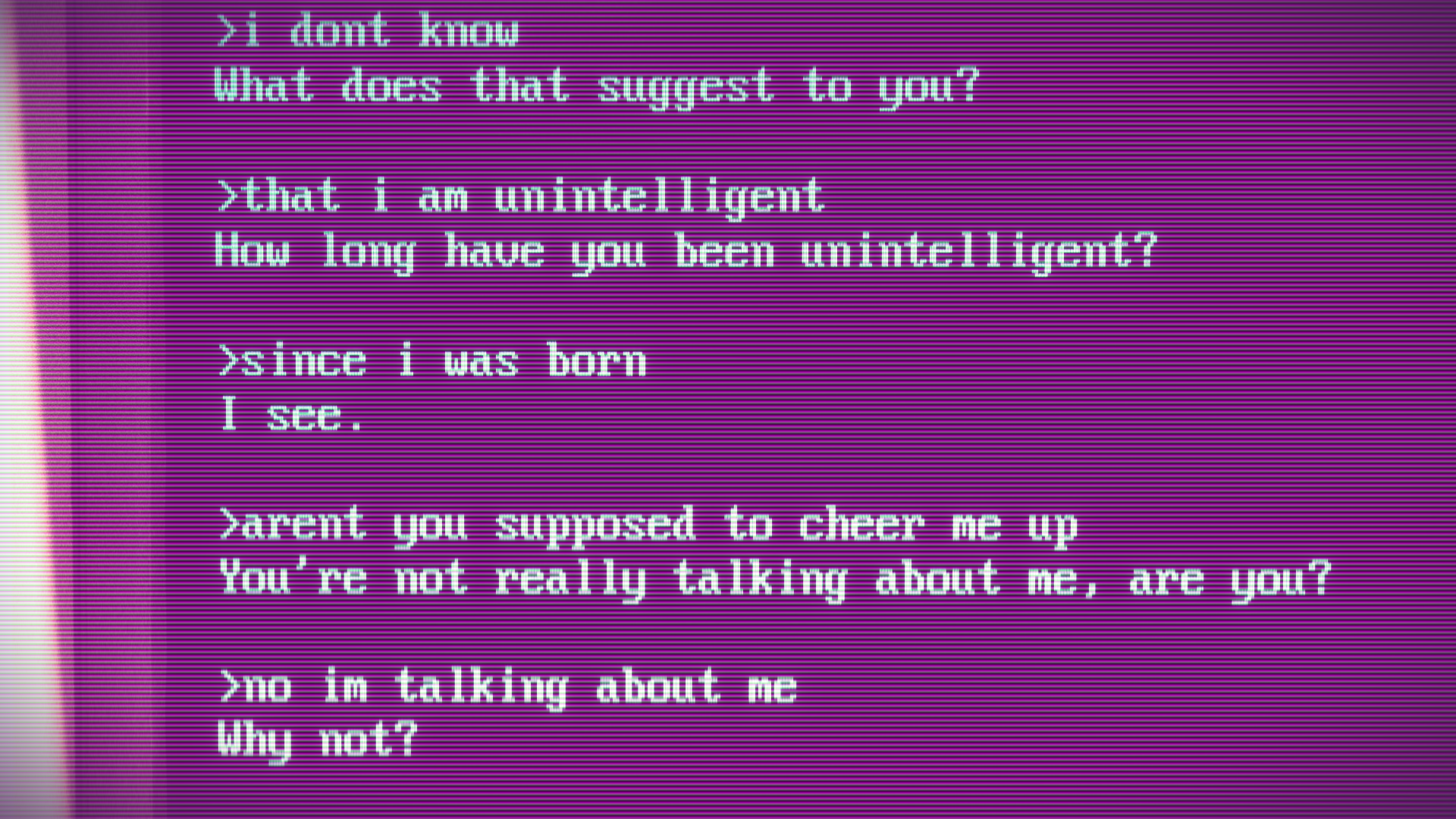
Output of the original ELIZA program (Marcin Wichary, CC BY 2.0)

Subscribe to podcast:



Transcript
Podcast Transcript
Clickable transcript on Substack episode page
Credits
Thanks to Michael Mullan-Jensen, Fadi Mansour, Evgeny Kuznetsov and Vlad A Gouf for subscribing to the podcast on Substack and supporting it financially! Additional thanks to Sir Galteran who continues to provide financial backing via Fountain.fm!
See Also
- Punching Upwards 8: Robotics Slop
- Punching Upwards 15: State Secret or Vibe Physics?
- Punching Upwards 22: Moltbook Madness
Sources
- ChatGPT promised to help her find her soulmate. Then it betrayed her, NPR, 14 February 2026
- Before Siri and Alexa, there was ELIZA – excerpt from Better Mind the Computer, BBC Horizon, 21 March 1983
- Weizenbaum’s nightmares: how the inventor of the first chatbot turned against AI, The Guardian, 25 July 2023
- Reading ELIZA: Critical Code Studies in Action, David M. Berry & Mark C. Marino, Electronic Book Review, 3 November 2024
- From Eliza to Internet: A Brief History of Computerized Assessment, J. Epstein & W.D. Klinkenberg, Computers in Human Behavior, 2001
- ELIZA – A Computer Program For the Study of Natural Language Communication Between Man And Machine, Joseph Weizenbaum, Communications of the ACM, Volume 9, Issue 1, January 1966
The theme music for the podcast is a track called Fight or Fall by Def Lev. Find out more about the show at fab.industries/podcast — new media, new rules!